Saturday, March 30, 2013

Sunday Snippets--A Catholic Carnival


Hello, and welcome to Sunday Snippets--A Catholic Carnival. We are a group of Catholic bloggers who gather weekly to share our best posts with each other. To participate, go to your blog and create a post titled Sunday Snippets--A Catholic Carnival. In it, discuss and link to your posts for the week--whether they deal with theology, Catholic living or cute Catholic kids. I'm mostly a book blogger so my posts are generally book reviews, some Catholic, some not. Make sure that post links back here. Once you publish it, come back here and leave a link below.

We also have a yahoogroup; signing up for it will get you one weekly reminder to post.  Click here to sign up.

Between pre-scheduled posts and those I wrote this week, I've been on a blogging roll.

After reading yet another article about the student loan "crisis" I decided to give some advice to those considering college.  After reading yet another facebook post about how horrible Obamacare is and another one advocating yet more government in healthcare I asked some questions I'd really like answered.   Many folks who read a lot of blogs do so through Google Reader.  Google announced recently that Google Reader will be shut down so like many others, I've been searching for alternatives.  Here is what I've found so far.  I'd love to get discussions going on any of those posts, so please chime in!

First Wildcard toured two Catholic books this week, so I participated.  The Church:  Unlocking the Secrets to the Places Catholics Call Home is about the "stuff" in churches--why it is there and what it mean.  Catholics Come Home  is about us normal people and what we can do to evangelize.

I reviewed two sweet romances:  Starting Now and Currant Creek Valley.

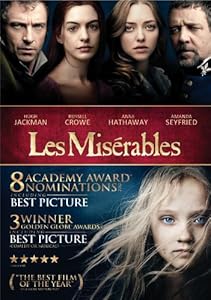
Finally, I reviewed a DVD, Les Miserables.  

Christ is Risen, Alleluia.  May you and yours enjoy the blessings of Easter today and always.

Friday, March 29, 2013

Things I'd Like to Know About Healthcare

"Everybody" knows that healthcare is too expensive.  "Everybody" knows we spend far more than other countries, and get worse results.  "Everybody" knows we have to do something.  "We" all know Obamacare is going to kill us. "They" all think Obama is the savior who is going to give us all great healthcare.  Me, I have a bunch of questions I have yet to see addressed on either side, probably because the answers don't help anyone defend his/her political opinion.
  • If you compare dollars spent on typical illnesses in the US, in Canada (universal single-payer system), in Great Britain (universal government-run system complimented with pay for service/insurance for those who can afford it) and in Germany (mandatory, often subsidized insurance based in workplace) what are the differences?  In other words, I'm not looking for percent of GDP overall, I want to know how much it costs to have a baby, get your gallbladder removed or treat stage one breast cancer of a particular variety.  I want to know how much well-baby care costs, how much a knee replacement costs or how much cataract surgery costs.  How much are birth control pills?  Pap smears?  And by cost, I'd like to know both the cost and the amount the typical patient pays out of pocket.  Take some typical patients and follow them through the system.  What happens?  Who decides?  Who pays?  What does it cost?
  • I  want to know what you get for your money in each of those cases.  If you are having a baby, how many ob visits, how many ultrasounds, how long do you spend in the hospital (and in the US, if there is a difference for the insured and the uninsured, I'd like to know that too).  If I get a positive mammogram, what happens here (assuming I'm insured, and assuming I'm not) and when does it happen?  What about there?  What are the survival rates?  What if I have back pain?  What treatment options are available, and how do I go about getting them?
  • I want to know who gets my money (or the patients' money in other countries).  How much do doctors make?  Nurses?  Nurses' Aids?  Hospital administrators? Drug companies?  Insurance companies?  Insurance company employees?  Government employees?
We've all heard that there are lies, damn lies and statistics.  We've all heard how much the US spends on  healthcare and we all groan when we hear how much our premiums are going up next year.  President Obama said his plan would get costs under control yet most insurers are predicting large premium increases next year because of more sick uninsured folks joining the pool while the well ones choose not to.   How are our costs different from other countries?  I've heard that two things we spend a tremendous amount of money on are caring for victims of gunshot and car accidents.  No  healthcare reform is going to "cure" that unless we start refusing to treat them.  Obesity and smoking cause millions of dollars in healthcare expenses yearly, disproportionately among the poor.  Is it fair to ask the overweight and the smokers to pay more for healthcare?  
I personally think we need to define the problem before we can solve it, and right now I don't think it is defined.  Is our problem that Pap smears cost so much that women can't afford to get them without a government subsidy?  If so,why do they cost so much?  Who is making the money?  Do they cost what they do only because they have a steady source of customers willing to pay that amount--in other words, if demand for Paps went down, would the price follow, or would they even go up in price because of economies of scale?  Is our problem that too many women who don't really need Pap smears are getting them , or getting them too often?  Or, are Pap smears something that given their current price, if they weren't covered by insurance, that the average American woman would consider money well spent to have one as often as she currently does?  I said Pap smears just because they are a regular part of healthcare for many women; you can substitute any other medication or procedure and ask the same questions.  

How much of our total healthcare bill is for relatively normal items, and how much for extraordinary things?  In other words, if you spend $1,000 per term healthy baby for hospital care after birth, and $100,000 for care of one premie, (those numbers are just made up, but you get the idea) and the cohort you are studying has 99 normal babies and 1 premie, the total cost for hospital care for newborns is $199,000, or an average of almost $2000 each.  However, no baby cost close to $2,000.  Is our problem that normal doctor visits cost too much, or than treating cancer costs too much, or both?  If so, how do we bring the cost down?

Movie Review: Les Miserables


About the Movie:
Hugh Jackman, Academy Award winner Russell Crowe and Anne Hathaway star in this critically-acclaimed adaptation of the epic musical phenomenon. Set against the backdrop of 19th-century France, Les Misrables tells the story of ex-prisoner Jean Valjean (Jackman), hunted for decades by the ruthless policeman Javert (Crowe), after he breaks parole. When Valjean agrees to care for factory worker Fantine's (Hathaway) young daughter, Cosette, their lives change forever.

My Comments:
A couple of weeks ago I got an email asking if I would be interested in reviewing Les Miserables.  Now, I'm a reader, not a movie watcher but I did know that there was a recent Broadway show Les Miserables, and was aware that it had been made into an acclaimed film.  Frankly, I didn't think that was the film I would be receiving; I figured it would be a cheap knock-off--some small studio's take on the classic book.  Still, the price was right (yep, free review copy) so I said  "sure".  When my teen daughter saw the above DVD, she asked "Why do they need you to review that; it's awesome!"  

The email was from an organization called Allied Faith and Family and here is what they had to say about Les Miserables:
LES MISÉRABLES provides a real-life look at the paths we choose in life, the decisions we make, and how the steep, narrow, uphill path points toward ultimate fulfillment. It shows how our human choices often conflict with God’s plan for our lives but how when we surrender to divine providence we can be confident that things will work out in the end. The story is so emotionally engaging and packed with Christian meaning, in fact, that at times you will not believe your eyes.
Both Valjean, through a major conversion initiated by a model priest, and Javert, another faithful Christian who prays to do God’s will, commit their lives to doing God’s will as they see it. But one operates with love while the other cares only about the letter of the law. One represents Peter and the other Judas Iscariot in that both betray Christ but one chooses repentance while the other chooses despair. And all of this operatic drama is performed against the most stirring soundtrack ever recorded live on a film set.
I asked Josh from Allied Faith and Family if he was looking for a review of the movie as family entertainment, and he said that was exactly what he was looking for.  Well, that's what he is going to get.

If your family has young kids, this film is not family entertainment.  As noted above, I'm not a big moviegoer so I'm not sure what types of movies usually get PG-13 ratings but this one was totally inappropriate for my almost nine year old.  First of all, she had trouble following the story at all.  I had to explain everything from  why the prisoners were pulling a ship into dry dock, what it meant when Valjean threw his papers away, why Fantine got her hair cut or teeth pulled, and why people looked so dirty.  Second of all I was trying to explain what the men were doing to the prostitute and why her clothes were almost falling off of her.  (I said some men enjoy hurting women).  Thirdly, there was a lot of death, including the death of  a boy about her age and of a woman dying in the arms of her love.  There was blood running in the streets.  There was a sex scene--you really couldn't see anything, but to those in the know it was clear what they were doing--and I'm not using that scene as an gateway to the birds and the bees talk with her.  There were a couple of scenes  where I covered her eyes and finally she left the room in tears after a death scene and I put her to bed.  

On the other hand, for appropriate age groups (definitely after the birds and the bees talk, and able to handle death up close) it was a wonderful film. It was almost completely sung and I loved the music.  The scenes of Paris and the crowds of poor were wonderfully done.  You could almost get a feel for the massiveness of the work but the massiveness of crowds beginning with the prisoners at the beginning of the film and ending with wedding at the end.  The story of course is classic.  

After we watched the movie I asked my teen daughter, who is currently taking AP Literature and is, therefore, used to analyzing literature for symbols and themes and that sort of thing, which Biblical characters Valjean and Javert stood for.  She asked if Valjean was a Christ figure.  When I told her Peter and Judas, she said that yes, she could see it, but she never would have come up with it on her own.  That was my thought as well.  

So, the verdict?  As an adult movie:  Grade A. As a family movie, for families with kids younger than teens:  F.  

Thanks Josh for the opportunity to review this movie.

Thursday, March 28, 2013

Book Review: Starting Now


About the Book:
For years Libby Morgan dreamed only of making partner in her competitive, high-pressure law firm. She sacrificed everything for her career—her friends, her marriage, her chance at creating a family. When her boss calls Libby into his office, she assumes it will finally be good news, but nothing can prepare her for the shocking reality: She’s been let go and must rebuild her entire life . . . starting now. 

With no job prospects in sight, Libby reaches out to old friends and spends her afternoons at A Good Yarn, the local knitting store. There she forms a close bond with Lydia, the sweet-natured shop owner; Lydia’s spirited teenage daughter, Casey; and Casey’s best friend, Ava, a shy yet troubled girl who will shape Libby’s future in surprising and profound ways. 

As A Good Yarn becomes a second home—and the women a new kind of family—Libby relishes the different person she’s become. She even finds time for romance with a charming and handsome doctor who seems to be her perfect match. But just as everything is coming together, Libby must make a choice that could forever change the life she holds so dear.

My Comments:
This is a Debbie Macomber novel and so you know that it will be sweet and clean.  Libby ends up sleeping with her guy, but all they do is sleep.  The ending is happy, though I think a little on the unrealistic side.  The book is general market romance, not Christian fiction but it mentions religion a little.  Once, Libby goes to the  hospital chapel, but instead of talking to God, she talks to her mother.  Later, she goes to some church down the street on Sunday.  Another character remembers his Catholic mother teaching him his memorized prayers, but it is noted that he hasn't said them lately.  

Starting Now is one of the Yarn Shop books and mentions a few of the main characters from the other books but it doesn't try to catch up readers with all the characters.   Those new to the series should not be lost trying to figure out who is who and how they fit together.  It just doesn't matter for this book, which pretty much has a self-contained plot without threads weaving back to other books.  

In short, if you like Macomber's books or are looking for an enjoyable light read with plenty of happily ever after, give this one a try.  Grade:  B.

I'd like to thank the publisher for making a review copy available via Edelweiss.  


View My Stats