Showing posts with label Grade: A-. Show all posts

Tuesday, February 23, 2016

Book Review: The Rain Sparrow


The Rain Sparrow (A Honey Ridge Novel)

About the Book:

Renowned yet private, thriller writer Hayden Winters lives a life colored by lies. As he is deeply ashamed of his past, his hunger for an honest relationship and dreams of starting a family remain unsatisfied, and he can trust no one with his secrets. He's determined to outrun his personal demons, but the charming old Peach Orchard Inn and a woman whose presence is as gentle as a sparrow's song stops him in his tracks. 

Carrie Riley is afraid of everything from flying to thunderstorms, and pretty much of life itself. But meeting the enigmatic writer staying at the inn emboldens her to learn everything about him. When they discover a vulnerable boy hiding at the inn, Hayden is compelled to help Carrie protect him. Soon they're led to a centuries-old mystery that haunts Hayden's sleep, and his only safe haven is Carrie. As the secrets of the past and present cause their lives to become entwined, all that's left to come to light is love—if the grim truth doesn't tear them apart first.

My Comments:

I love stories set in two different time periods and that is exactly what this second book in the Honey Ridge series is.  You can read my review of the first, The Memory House, here.  Like The Memory House, this story is set at the Peach Orchard Inn.  The modern-day thread is the story of Hayden Winters  and Carrie Riley.  The historical thread is set during Reconstruction and involves a local woman and a Yankee who is working for the family.  While the historical story in The Memory House is told through letters, in this book the historical story is dreamed by Hayden.  The unanswered mystery at the end of The Memory House was the fate of two boys; one from the modern day and one from the Civil War era.  The Rain Sparrow mentions that the boys are missing; however if you didn't read The Memory House  I'm not sure you'd even notice the reference to the modern day boy and I doubt you'd consider the reference to the Civil War boy to be all that important.  There was no resolution to that part of the story, or any real movement toward resolution.  Despite the fact that this book is the second in the series, it stands well by itself, though knowing the back story on some peripheral characters does make the experience of the story a bit richer.  

I'm not usually one to comment on the writing but in this case I will; I loved Linda Goodnight's writing and consider it above the usual writing found in romance novels, particularly series romance novels.  

I'd like to thank the publisher for making a review copy available via NetGalley.  Grade: A-

Wednesday, April 22, 2015

Review: Things Unknown to Lily

Things Unknown to Lily (The Lily Series) (Volume 5)

About the Book:
Charlotte was willing to accept whatever suffering came her way, just to be with the man she loves. But she could never have foreseen how difficult it was going to be to weather the louring tempests of her husband’s depression. Mystified by why her devotion is not enough to make John happy, she carries the burden of his sadness, unaware that it is a long-ago secret, kept from his aunt Lily, that prevents him from surrendering to the joy born of true love. Healing is about to come from an unlikely place, as it often does with anyone who has known Lily and grows to understand that something quite unexpected can change everything.

My Comments:
Lily and her family are back.  For those who haven't read the other books, Lily was a woman with Down Syndrome who made a profound (and good) difference in the life of her family.  This is the story of her nephew (whose mother conceived him so that Lily could have a child to help raise) and his wife.  John, the nephew suffers from depression.  His wife Charlotte is almost totally blind, and will be totally blind soon.  Charlotte wants to help John, but he won't let her in.  In the end, Lily is the answer.

I love Sherry Boas' writing, not only her stories, but her writing as well, and if you peruse this blog, you'll find that there are few writers about whom I say that.  She has a real gift in her use of language; if I had to guess I'd say she was a poet in a previous life, not a journalist (though in reality, she was a journalist).  

While classified as religious fiction, Things Unknown to Lily is on the milder end of the spectrum.  The fact that the characters have faith is mentioned, and Mother Theresa makes an appearance but this is no sermon dressed as a story.  The faith elements are there, but they belong in the story naturally and for the most part did not feel forced.  It is definitely not a "find Jesus and life will be grand" book.  

Fans of the series will enjoy catching up with members of the Lovely family but Things Unknown to Lily stands well on its own--you don't have to read the other books first, but they do add an additional dimension to the story.  I like it enough to give it an A- and if you've read this blog very long, you'll know that's high praise.  

I'd like to thank Catholic Word for sending me a review copy of the book.  Catholic Word describes itself as " a one-stop resource for leading programs and religious titles from over 35 top Catholic publishers. For over 15 years, Catholic Word has built a reputation based on quality, personal relationships and a devotion to excellence in service."  The mission they espouse is "to build up the Church one soul at a time through top quality Catholic materials and resources. Wherever a person is on their faith journey, we offer real help to taking the next step closer to God. Our motto is to do the right thing, in the right way, for the right reason."  They claim to be "100% faithful to the teachings of the Magisterium".  


Sunday, April 05, 2015

Review: The Day We Met


About the Book:
For fans of Jojo Moyes’s Me Before You comes a beautifully written, heartwarming novel about mothers and daughters, husbands and wives. The Day We Met asks: Can you love someone you don’t remember falling in love with?

A gorgeous husband, two beautiful children, a job she loves—Claire’s got it all. And then some. But lately, her mother hovers more than a helicopter, her husband, Greg, seems like a stranger, and her kids are like characters in a movie. Three-year-old Esther’s growing up in the blink of an eye, and twenty-year-old Caitlin, with her jet-black hair and clothes to match, looks like she’s about to join a punk band—and seems to be hiding something. Most concerning, however, is the fact that Claire is losing her memory, including that of the day she met Greg.

A chance meeting with a handsome stranger one rainy day sets Claire wondering whether she and Greg still belong together: She knows she should love him, but she can’t always remember why. In search of an answer, Claire fills the pages of a blank book Greg gives her with private memories and keepsakes, jotting down beginnings and endings and everything in between. The book becomes the story of Claire—her passions, her sorrows, her joys, her adventures in a life that refuses to surrender to a fate worse than dying: disappearing.

My Comments:
Claire and I have something in common.  We both had babies when we were 43.  For me, it was the continuation of life as I had lived it for some time--in other words, my answer to the "Same husband?" question some people ask when finding out I have adult kids and a ten year old is "yes". Claire was the single mother of a teen when she met Greg, and when she learned she was expecting his baby, they got married.  Finally Claire thought she had it all.  Unfortunately, it didn't last.  Shortly thereafter, Claire learned she, like her father before her, had early-onset Alzheimer's Disease.   This is the story of her life in the months after her diagnosis.  

Each chapter is titled with the name of a character--usually either Claire or her daughter Caitlyn, though her mother gets a few.  Some are also titled with a date, to give the necessary backstory. The chapters are written in the first person and give that character's view of what is happening, or in the post-dated chapters, of what did happen.  We hear Claire's frustration with the limitations her disease places on her.  Her family has taken away her car keys and her house keys.  She is not allowed out without someone (and like a teen, she rebels and runs away).  She is an English teacher who one day cannot read the often repeated favorite story of her three year old.  Some days she is better than others, but the trajectory is clearly downhill.  She knows her mother and her daughters and remembers their places in her life, but even though she is told time and again that Greg is her husband, she does not remember him.  He seems nice enough but he doesn't belong.  Then, one day when she gets lost, she meets a man--a man to whom she is attracted, a man who doesn't seem to realize that she isn't all there, a man who doesn't treat her like she is ill.  Despite her increasing failing memory, she manages several rendezvous with him.

Besides being the story of Claire, it is also the story of Caitlyn, her college-age daugther,  Caitlyn had been at the university and was dating a guy with whom she was in love.  He dumped her when she found out she was pregnant.  Because of her emotional state at the time, she failed her exams and was not invited back the next term, but she hadn't told her family any of this.  Of course a pregnancy doesn't stay secret for long, and this is the story of how Caitlyn comes to terms with hers, and about how Caitlyn finds out about her father, a man she thought had rejected her as her boyfriend had rejected her baby.

I really enjoyed this book.  At the point we meet her, Claire realizes how much she has lost, and how much more she will lose before she loses the battle for her life.  I guess in some ways it is like getting the diagnosis that you have terminal cancer when your symptoms are still at the bothersome stage, as opposed to the debilitating stage.  You are annoyed by the way things are, but you know they are going to get much worse and that there isn't anything you can do about it.  The use of the first person makes the story personal in a way that using the third person would not have.  

I'd like to thank the publisher for making a review copy available via Edelweiss.  Grade: A-


Tuesday, December 30, 2014

Review: A Thing of Beauty


A Thing of Beauty

About the Book:
Former child star Fiona Hume deserted the movie biz a decade ago--right after she left rehab. She landed in Baltimore, bought a dilapidated old mansion downtown, and hatched dreams of restoring it into a masterpiece, complete with a studio for herself.She would disappear from public view and live an artist’s life.

That was the plan.

Ten years later,Fiona’s huge house is filled with junk purchased at thrift stores, haggled overat yard sales, or picked up from the side of the road. Each piece was destined for an art project . . . but all she’s got so far is a piece of twine with some antique buttons threaded down its length.

She’s thirty-two years old and still recognizable, but Fiona’s money has finally run out. She’s gotten pretty desperate, too, and in her desperation she’s willing to do almost anything for money. Almost. So it is that she comes to rent out the maid’s quarters to a local blacksmith named Josia Yeu.

Josia is everything Fiona isn’t: gregarious, peaceful, in control without controlling . . . in short,happy. As the light from the maid’s quarters begins to permeate the dank rooms of Fiona’s world, something else begins to transform as well—something inside Fiona. Something even she can see is beautiful.

My Comments:
Lisa Samson's books are on my "must read" list and this one doesn't change that.  The focus of the book is love; how having it and how not having it have had an effect on Fiona's life.   As noted above, Fiona was an actress; in fact she was the daughter of an actor and actress.  We learn early on that as a teen she was sexually abused and believes that her parents did nothing about it.  Her parents also mis-managed her money and as a result, she divorced them, quit acting and moved to Baltimore, which is where her paternal grandfather lived.  She planned to become an artist, but instead has turned into a hoarder.  While she collects things with the idea of turning them into art, the transformation never takes place; instead she has a large house that is overrun with her treasures to the point that she can't find what she needs.

When it gets to the point that what Fiona needs is money, she decides to rent out a room.  She sets up house rules that basically say that her tenant has use of the bedroom and bathroom and that's it and that there is to be almost no contact between them.  The tenant she ends up picking is Josia who loves her (not romantically) immediately.  He also loves her house and her treasures and shows how the treasures can improve the house.  While I liked Josia I found him to be the most unbelievable character in the book.  

The story contrasts the lack of love of Fiona's mother, the flawed love of her father, the patient and reserved (and somewhat strange) love of Jack and the almost perfect love of Josia.  Once Fiona realizes that people do really love her she is able to open her heart to accept that love, and to shake the dust from her feet when dealing with someone who doesn't love her, but should.  

I've said in other reviews that I love Samson's writing.  I have an advance review copy, and the final may be different but I just have to share this passage with you.  The paparazzi have found Fiona, Twitter is full of tweets about her and she is discussing this with a man who is important to her:

You know what?  People are always searching for truth and I'm wondering if that even matters anymore.  ... Social media...brought about these thoughts? Yes!  Nowadays people formulate truth; they don't find it.  I'm sure people have opinions about what happened to me even though none of them have heard about it from me.  And you know what is even sicker?  "They are so sure about it?"  Right, So I ask you.  If this is what happens with the situation of someone...as insignificant as I am, how can we possibly know...what goes on with what really matters....a lot of them know nothing first hand and think they know everything.  And they talk-talk-talk-talk and post their opinions all over the Internet and it's loud and ridiculous.  It's like were all on this ship of fools and nobody knows if the boat is even real. 
The book is published by Harper Collins Christian publishers and the themes of love and rebirth are certainly Christian.  I guess Josia is kind of a God figure--he loves unconditionally, not romantically and makes old things new again.  Nevertheless there is no mention of God, Christ, religion or church in the book and I see no reason that it should offend anyone's religious sensibilities or lack thereof.  

I'd like to thank the publisher for making a review copy available via NetGalley.  Grade:  A- 

Tuesday, June 10, 2014

The Beekeeper's Ball: My Review


The Beekeeper's Ball: Bella Vista Chronicles Book 2

About the Book:
#1 New York Times bestselling author Susan Wiggs returns to sun-drenched Bella Vista, where the land's bounty yields a rich harvest…and family secrets that have long been buried. 

Isabel Johansen, a celebrated chef who grew up in the sleepy Sonoma town of Archangel, is transforming her childhood home into a destination cooking school—a unique place for other dreamers to come and learn the culinary arts. Bella Vista's rambling mission-style hacienda, with its working apple orchards, bountiful gardens and beehives, is the idyllic venue for Isabel's project…and the perfect place for her to forget the past. 

But Isabel's carefully ordered plans begin to go awry when swaggering, war-torn journalist Cormac O'Neill arrives to dig up old history. He's always been better at exposing the lives of others than showing his own closely guarded heart, but the pleasures of small-town life and the searing sensuality of Isabel's kitchen coax him into revealing a few truths of his own. 

The dreamy sweetness of summer is the perfect time of year for a grand family wedding and the enchanting Beekeeper's Ball, bringing emotions to a head in a story where the past and present collide to create an unexpected new future. 

From "one of the best observers of stories of the heart" (Salem Statesman-Journal), The Beekeeper's Ball is an exquisite and richly imagined novel of the secrets that keep us from finding our way, the ties binding us to family and home, and the indelible imprint love can make on the human heart.

My Comments:
I loved this one.  Isabel is about to open a cooking school on the family estate.  At the same time, her half sister, the heroine of The Apple Orchard is planning her wedding.  Thrown into the mix to keep things interesting are Cormac O'Neill, who is there to write a biography of her grandfather, who was a Danish resistance fighter during WWII and Jamie, a pregnant young woman who hires on as the beekeeper and you have the makings of a story that is more than the standard romance.  In The Apple Orchard, Isabel and Tess discover each other and they learn that their father (who neither woman knew) had been the birth son of Annelise and their grandfather, rather than the son of his mother.  In this story they learn why. We hear Isabel's grandfather tell the story of the war years and their aftermath.  We also learn that Isabel has been through battles of her own, and cheer as she sheds the shields she carries because of them.  

If it is important to you, Isabel is in bed with a man before marriage but the scene is not explicit.

I complained about the unrealistic end to The Apple Tree.  This one seemed much more realistic, but it did have one unlikely part, that is probably a cliffhanger for the next book.  We also never hear for sure what happened to Jamie's baby, so that will probably be covered in the next book too.  Still, I'm giving this one an A- and would like to thank the publisher for making a review copy available via NetGalley.  

Saturday, September 14, 2013

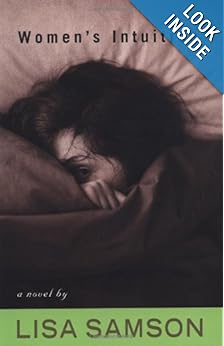
Book Review: Women's Intuition


About the Book:
Lark Summerville’s life has few surprises–and that’s just how she likes it. All she wants is to live out her angst-riddled life in her blue-collar Baltimore neighborhood, punctuated by weekly trips to her local parish, where Lark is organist, and telephone conversations with desperate souls who dial her hotline at 1-777-IPRAY4U. 

Then one night, Lark’s home is destroyed by a fire, forcing her out of her comfortable nest and back to the childhood home she has avoided for years. At Stoneleigh House, Lark is surrounded by three very different women: her grown daughter, Flannery; her barely tolerable socialite mother, Leslie; and Prisma Percy, housekeeper and family confidante, all of whom believe Lark was widowed years before. 

In this circle of women, Lark’s carefully constructed existence begins to unravel, even as the promise of a new one unfolds. But when her contrite ex-husband shows up, longing to assume his role as Flannery’s father, twenty years after his desertion, Lark finds that she must face her own lies–and her past–before a new life can unfold.

My Comments:
This is one that has been sitting in my garage for three years, at least that's what Amazon told me when I went to get the image for this post.  None of my review books were calling my name so I headed to the toppling tower of tbr and picked this one.

Lisa Samson is a favorite author, and if you search my archives, you'll find many of her books.  She was raised at least nominally Catholic, became an Evangelical Protestant, and within the past few years, has reverted to Catholicism.  She writes Christian fiction but often has Catholic elements.  

Lark in this book suffers from depression, anxiety and is growing toward agoraphobia.  She has allowed her world to shrink more and more each day and by the beginning of this book she no longer drove, she worked by playing the organ at a local Catholic church (though she was not Catholic) and she rarely left her house if she could help it.  Her daughter Flannery has just returned home from college, when, as noted above, a fire destroys Lark's home, forcing her to move in with her wealthy (and estranged) mother and her mother's housekeeper.

The daughter and the housekeeper are the two strong characters.  Both are open to the working of God in their lives, and both encourage the Lark and her mother to grow, to be open to God and to people.  The book is Christian fiction and it truly is about the working of God in these women's lives.  It isn't a story with a little religion pasted on top.  

I love Samson's writing, I love her stories and I enjoy her characters who are anything but stock.  My only complaints about this book deal with Catholicism and I'm not sure whether she was ignorant or using creative license.  Samson referred to the inside of the church as the sanctuary, while Catholics refer only to the area near the altar as the sanctuary.  Also, she had a Catholic wedding taking place outside a church and within a week of contacting priest.  Because of those flaws, I'm giving this book an A- rather than an A.  

According to Amazon, I bought this book so I can say whatever I want about it.  

Tuesday, May 15, 2012

Review: The Unfinished Work of Elizabeth D.


About the Book:
Before there were blogs, there were journals. And in them we’d write as we really were, not as we wanted to appear. But there comes a day when journals outlive us. And with them, our secrets.

Summer vacation on Great Rock Island was supposed to be a restorative time for Kate, who’d lost her close friend Elizabeth in a sudden accident. But when she inherits a trunk of Elizabeth's journals, they reveal a woman far different than the cheerful wife and mother Kate thought she knew. 

 The complicated portrait of Elizabeth—her troubled upbringing, and her route to marriage and motherhood—makes Kate question not just their friendship, but her own deepest beliefs about loyalty and honesty at a period of uncertainty in her own marriage. 

The more Kate reads, the more she learns the complicated truth of who Elizabeth really was, and rethinks her own choices as a wife, mother, and professional, and the legacy she herself would want to leave behind. When an unfamiliar man’s name appears in the pages, Kate realizes the extent of what she didn’t know about her friend, including where she was really going on the day she died. 

Set in the anxious summer after the September 11th attacks, this story of two women—their friendship, their marriages, private ambitions and fears—considers the aspects of ourselves we show and those we conceal, and the repercussions of our choices.

My Comments:
Once  upon a time, many years ago, during the years starting in college and pretty much ending when I got married, I kept a journal.  One day when they clean out my house, my kids will be able to read all about my post-adolescent angst.  They'll be able to read my prayers, my thoughts, about my dates, and about how I felt about their dad at that time in my life.  The journals are in a box in the garage along with other memorabilia from  high school, college and beyond.  I wrote them for eyes and for God's and there is a certain honesty there that I sometimes miss, but though I've tried to get back in the habit several times since I married, I finally decided that for whatever reason, that's not what God is calling me to at this time in my life. Perhaps He knows the stakes could be too high if someone read it. Perhaps He knows I need to be talking to my husband rather than to a book. 

Every once in a while when I'm in the garage I'll get the urge to pull those books down and read them.  It's funny sometimes how things that seemed so important at the time, calling for pages of writing, are completely gone from my memory,so that even reading about them doesn't bring them back.  It is also funny how different my memory can be from reality.  I was an elementary education major and spent the last semester of college as a student teacher. In general my memories of that time are good.  In general my memories of the two years I spent as a teacher are not. It was interesting to read a journal entry from my student teaching days "The kids were loud, I was a bitch, what else is new?"  Evidently things weren't so wonderful even then.  

As noted above, The Unfinished Work of Elizabeth D. is the story of Kate and Elizabeth and Elizabeth's journals.  In her will, Elizabeth asked Kate to decide what to do with the journals, and Kate decides that means she has to read them, and spends the whole summer reading years worth of journals,  the whole summer learning that her friend was not who she appeared to be. In the process Kate has to take a look at who she is and what she wants from life.  

Kate and Elizabeth both spent early adulthood in New York City.  Elizabeth was a graphic artist; Kate was a chef.  Once they became mothers they moved to the suburbs and ended up in the same neighborhood playgroup.  Kate longed for her life as a chef but always managed to dabble in paid employment.  Elizabeth appeared to be super happy super mom, but unknown to most, she missed her career and tried hard to keep a finger in the door.  As Kate reads about how Elizabeth's life evolved, more by chance than by choice it seemed, she questions her own choices and reflects on her own life.

Besides being a good story, this book is also a showcase for good writing--writing that evokes feelings without being maudlin, prose that almost sounds poetic.  Yes, I liked this one and I'm giving it an A--and in case you are wondering, it is a clean read.  

I'd like to thank the publisher for making a review copy available via Edelweiss.  I was not obligated to write a positive review,though in this case I was glad to do so.  

Sunday, September 19, 2010

Lady in Waiting: My Review

Lady in Waiting: A Novel

It is said that those who do not know history are doomed to repeat it.  While I'm sure there is some truth to the statement, I have to wonder how much of history we are doomed to repeat simply because of our humanity?  While our fashions, governments and customs change through the years, the basics of humanity remain very much the same.  

Susan Meissner's books, including Lady in Waiting: A Novel link the past and the present through some artifact.  In this case, the artifact is a ring found in an old book.  It has the name "Jane" engraved inside it, and "Jane" is the lady who found it.  The modern-day Jane lives in Manhattan.  Her son just left for college and her husband just left her, saying they needed a break from each other to decide what they wanted in the future.  She is a woman who has always been a pleaser, making the choices she made because others wanted her to make them.  The historical Jane is Lady Jane Grey who ruled as Queen of England for 9 days.  Her story is told by her seamstress, Lucy.  Jane's path it seems is directed by others, primarily her parents, and her life is ended by an executioner--but at the end she has a choice to make, and revels in being able to make it.

I'm sometimes leery about reading books classified as Christian fiction if they are set during the Reformation.  All too often the Catholic Church ends up being the villain, the awful group trying to keep the truth from the masses.  Since I had read and enjoyed Meissner's books in the past, I decided to give this one a try, and I'm glad I did. 

 For those not familiar with Tudor England, Henry VIII (the guy with all the wives) broke from Rome and established the Church of England.  He left three children when he died:  Edward, who was raised Protestant; Mary who was raised Catholic and Elizabeth who was raised Protestant.  When he died, Edward became king, but was still a boy.  Edward died before he married.  The powers behind the throne did not want a Catholic ruler, so they got Edward to write a will passing the throne to his cousin, Jane, a Protestant.  Mary's supporters rallied and she was able to take power.  She had Jane and her supporters convicted of treason and executed.  Wikipedia calls Jane a Protestant martyr and the book states that Mary sent her confessor to try to obtain Jane's conversion (though whether it would have made any difference in her lifespan will never be known).  

While Lady in Waiting: A Novel talks about Jane writing to the Reformers on the Continent, the content of those letters is not discussed; religious references in the book are few and if the publisher wasn't a publisher of Christian fiction, I'd classify the book as historical fiction, not Christian fiction.  Though it mentions Jane being a Protestant and refusing to convert to Catholicism when Mary tried to get her to do so, I'd never know what either faith was about by reading this book.  In a lot of ways, this book confirms my personal opinion that the Reformation, for most people, particularly in England, was a lot more about politics than about religion. 

In short though, this is a wonderful novel that tells the story of two women who lived hundreds of years apart; two women whose lives seemed to be directed by other others; two women who realize that they can make choices.  It is well-written and is a title I'd recommend to those who say they don't like Christian fiction.

View My Stats