Showing posts with label Grade: A. Show all posts

Saturday, May 01, 2021

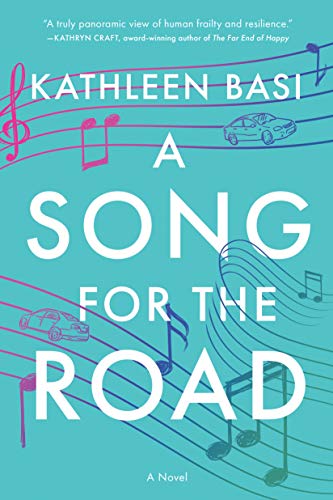
Review of A Song for the Road by Kathleen Basi


About the Book:

It's one year after the death of her husband and twin teenagers, and Miriam Tedesco has lost faith in humanity and herself. When a bouquet of flowers that her husband always sends on their anniversary shows up at her workplace, she completely unravels. With the help of her best friend, she realizes that it's time to pick up the pieces and begin to move on. Step one is not even cleaning out her family's possessions, but just taking inventory starting with her daughter's room. But when she opens her daughter's computer, she stumbles across a program her daughter has created detailing an automated cross-country road trip, for her and her husband to take as soon-to-be empty nesters.

Seeing and hearing the video clips of her kids embedded in the program, Miriam is determined to take this trip for her children. Armed with her husband's guitar, her daughter's cello, and her son's unfinished piano sonata, she embarks on a musical pilgrimage to grieve the family she fears she never loved enough. Along the way she meets a young, pregnant hitchhiker named Dicey, whose boisterous and spunky attitude reminds Miriam of her own daughter.

Tornadoes, impromptu concerts, and an unlikely friendship...whether she's prepared for it or not, Miriam's world is coming back to life. But as she struggles to keep her focus on the reason she set out on this journey, she has to confront the possibility that the best way to honor her family may be to accept the truths she never wanted to face.

Hopeful, honest, and tender, A Song for the Road is about courage, vulnerability, and forgiveness, even of yourself, when it really matters.

My Comments:

I'm writing this post a week after a man who was very dear to my girls when they were babies was buried, a few days after the mom of a high school classmate--the mom who allowed homecoming floats to be built at her house for six years straight (which meant that she had 50+ teens there every night for a week)--was buried and the day after I heard that my pastor's mom died.  Despite the fact that we are in the holiday season, despite the fact that we are no longer close to that man, that the classmate was never a close friend of mine and that I'd best characterize my pastor as an acquaintance, having three deaths touch me during this supposedly joyful time of year has got me tearful.

How awful must it be to lose your whole family is one split second?  That's what happened to Miriam a year ago, and though she has buried much of her grief for the last year, something happens and now she knows she has to deal with it--and, as noted above, finds a program her daughter designed with the idea of sending her and her husband on a road trip.  

As Miriam travels across the country we learn about her family history and why things were not exactly how they appeared to outsiders.  We "see" some attractions that are not at the top of most people's "must see" list but which are interesting and charming in their own way (I've been to one of them several times, guess which one).  

The author, Kathleen Basi, is a composer and musician, along with being a writer, and she has made music a part of the story.  Miriam's son was a composer and left an unfinished piece, and she, who has spent her adult life as a church musician, is trying to finish it.  Basi uses terms known to musicians and which brought back memories of the piano class I took one semester in college, though I hadn't a clue what they meant--I just translated those passages as "she's writing fancy music now" and let it go at that.  Hopefully the words would mean more to a musician.  Her son's music wasn't the only unfinished business in the book, and Miriam's journey leads her to confront and deal with at least two big unfinished things.     I loved watching her journey not only through the country but through her grief and into the lives of others. 

I'll be the first to admit that my opinion of the book may be affected by the fact that the author, Kathleen Basi, is someone I've gotten to know via the internet.  I've watched her kids grow up and discussed the challenges of parenting special needs kids.  I've followed the Facebook page on which she has shared her progress with this book and now I'm glad to give this book an A, because it was an engaging read that touched my heart.  

I'd like to thank her publisher for making a review copy available via NetGalley.       

If you click on the book title in the labels below, you can read other things I've written about the book.                                                      

Sunday, April 29, 2018

Review: As Bright As Heaven


About the Book:


In 1918, Philadelphia was a city teeming with promise. Even as its young men went off to fight in the Great War, there were opportunities for a fresh start on its cobblestone streets. Into this bustling town, came Pauline Bright and her husband, filled with hope that they could now give their three daughters--Evelyn, Maggie, and Willa--a chance at a better life.

But just months after they arrive, the Spanish Flu reaches the shores of America. As the pandemic claims more than twelve thousand victims in their adopted city, they find their lives left with a world that looks nothing like the one they knew. But even as they lose loved ones, they take in a baby orphaned by the disease who becomes their single source of hope. Amidst the tragedy and challenges, they learn what they cannot live without--and what they are willing to do about it.

As Bright as Heaven is the compelling story of a mother and her daughters who find themselves in a harsh world not of their making, which will either crush their resolve to survive or purify it.

My Comments:

I like happy feel-good reads, and this isn't one.  Yes, it ends with joy, and hope, and vision of the future, but death is the reason for much of the book, and for that reason it took me a while to read. No, it isn't a difficult read, it's just that my mind is mush and sometimes it takes work to get beyond a romance novel lately.

I've read a lot of books about WWII, but this is one of the few set during WWI that I've read. 1918 was not only the year of WWI, it was also the year of the flu epidemic; both play a role in the story, but the flu in a much more powerful way--and some quick research I did showed that more people died of the flu than from the war.  

What I've always considered to be signature of Susan Meissner's writing is an artifact of some sort linking a character in today's world to a character in the past.  That is lacking in this book; it is pure historical fiction with no modern characters or subplot.  Also, may of Meissner's early books were Christian fiction, though generally on the milder end of the spectrum; this is general market women's fiction.

The story starts with Pauline's youngest child dying and Pauline never completely emotionally recovering from that.  It's funny, we know in our heads that babies died in those days, and that it wasn't uncommon for people we consider young today to die, but how often do we put ourselves in the shoes of those young mothers whose babies didn't survive infancy?  I've "always" known that my mother had an older sister--though I've never thought of her as such--she was nothing to me but a stone in the graveyard.  When I was pregnant with my first child, I threatened to miscarry and at that point I wondered how my grandmother had felt when her baby died.  Years later for some reason my mom told me that my grandmother became depressed when she went through menopause and that my grandfather had asked my mom, who was on her own by that time, to come home for a while to cheer her mom. My mom said that my grandfather mentioned that my grandmother had been like that after they lost the baby, and that he understood that, but couldn't  understand why she was so upset over something that everyone knew would happen at about that age.  

Back to the book, Pauline and her family move to Philadelphia to live/work in a funeral parlor and caring for the dead Pauline begins to heal.  

The story follows the family through the flu epidemic and then the end of WWI and to the beginning of Prohibition. The world was changing, and so was the family.  One of the daughters ends up in medical school and working as a psychiatrist.  

Susan Meissner does a great job of capturing the era, the death, the hope, the change and despite the fact that it isn't all smiles and rainbows, I recommend the book highly.  Grade:  A. 

Thanks to the publisher for providing a review copy via NetGalley. 

Monday, January 08, 2018

Review: The Promise Between Us

The Promise Between Us by [White, Barbara Claypole]


About the Book:

Metal artist Katie Mack is living a lie. Nine years ago she ran away from her family in Raleigh, North Carolina, consumed by the irrational fear that she would harm Maisie, her newborn daughter. Over time she’s come to grips with the mental illness that nearly destroyed her, and now funnels her pain into her art. Despite longing for Maisie, Katie honors an agreement with the husband she left behind—to change her name and never return.

But when she and Maisie accidentally reunite, Katie can’t ignore the familiarity of her child’s compulsive behavior. Worse, Maisie worries obsessively about bad things happening to her pregnant stepmom. Katie has the power to help, but can she reconnect with the family she abandoned?

To protect Maisie, Katie must face the fears that drove her from home, accept the possibility of love, and risk exposing her heart-wrenching secret.

My Comments:

I loved this book and highly recommend it. 

When someone becomes physically ill--whether with the 24 hour stomach bug or cancer or chicken pox--they generally garner the sympathy of those around them.  It is expected that if the disease lasts more than a day or two that a trip to the doctor has at least been considered, and it is assumed that decent health insurance will cover that visit.  We may all joke about how men's colds are so much worse than Mom's colds but we rarely blame the person who is physically ill for his or her disease.

Mental illness is different.  Somehow, many of us think that if the mentally ill would just get their acts together and quit acting that way, their illnesses would disappear--or we think that the illness is caused by weakness on the part of the one who is ill.

The main character in The Promise Between Us is Katie, and Katie is mentally ill.  Katie is also a very strong and selfless woman who has nearly lost her life to that illness.  Katie has OCD and anxiety and in this book we stand in her shoes and see the world through her eyes.  We see her cope (sometimes well, sometimes not so well) with the voices inside her head.  We see how her mental illness affects her relationships.  

Two other adult characters in the book suffer from a mental illness and for one of them, denial is his drug of choice.  In both cases we see how seemly sane people can suffer greatly from mental problems even though they appear, at least on the surface, to be happy and successful.

Finally, there is Maisy, a bright well-loved child who is starting to show signs of OCD.  She has four adults in her life who love her and want the best for her; they just disagree about what that is when it comes to her OCD and to their relationships with each other.  

Barbara Claypole White's niche seems to be novels dealing with mental illness as you will note if you click her name under this post.  As I've noted about her other books, White does a great job of making her characters more than their illness, though the illness is the focus of this story.  

I'd like to thank the publisher for making a review copy available via NetGalley.  Grade:  A

Friday, September 01, 2017

Review: Something Like Happy

Something Like Happy by [Woods, Eva]


About the Book:

This joyful, poignant and deeply uplifting novel celebrates the importance of living each day to the fullest through the tale of two very different women—one at a crossroads in life, one given three months to live—who team up to participate in the “100 happy days” challenge and embark on an unforgettable journey that brings each of them redemption, love, and happiness.

With her marriage over and her career stalled out, thirty-something Annie’s life is at a standstill. Then she meets colorful, upbeat Polly, whose recent cancer diagnosis has left her determined to make the most of every moment. Polly sets a challenge: learn to be happy in just 100 days. From dancing in fountains to riding rollercoasters, Annie is drawn into Polly’s world, discovering friends, hope and even love. But what happens when time runs out and she’s tested to her limits once again?

My Comments:

This is a story about two women.  Annie has lost her life and Polly has been given three months to live.  

Annie was the happily married mother of a beautiful baby boy until he died, she fell into depression, and her husband left her. Since that time she has been existing--working a job she hated, sharing a depressing apartment with a roommate she really doesn't know and taking care of her mother, who has early-onset Alzheimer's.  She has no friends and she has no fun in her life. 

Polly had it all too--great job, handsome husband, great friends and a supportive family.  However when "Bob", her brain tumor, made himself known, she decided that she would spend her last few months grabbing life, not waiting for death.  

We follow Annie and Polly though several weeks of doing things they have dreamt of and never done or things Polly wants to do at least once more.  Polly pushes Annie and others outside their comfort zones and gets them to grab for things that make them happy.

The book is set in England and uses British terms like "jumper" or "NHS".  

Polly's mother is a churchgoer but Polly has not been during her adult life.  Now that she is dying, Polly can't decide whether she'd rather believe, or not.  

While there are no bedroom scenes in the book, two of the characters are homosexual.  

I smiled, laughed and cried while reading this book.  I highly recommend it and give it an A.  I'd like to thank the publisher for providing a review copy via NetGalley.  

Thursday, June 01, 2017

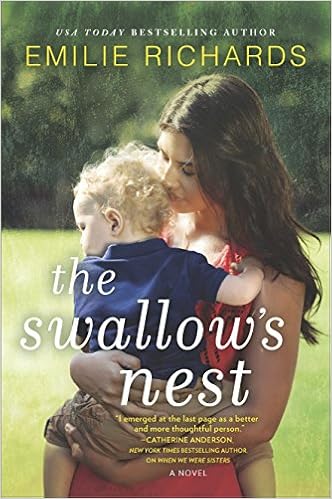
Book Review: The Swallow's Nest


About the Book:

When Lilia Swallow's husband, Graham, goes into remission after a challenging year of treatment for lymphoma, the home and lifestyle blogger throws a party. Their best friends and colleagues attend to celebrate his recovery, but just as the party is in full swing, a new guest arrives. She presents Lilia with a beautiful baby boy, and vanishes. 

Toby is Graham's darkest secret—his son, conceived in a moment of despair. Lilia is utterly unprepared for the betrayal the baby represents, and perhaps more so for the love she begins to feel once her shock subsides. Now this unasked-for precious gift becomes a life changer for three women: Lilia, who takes him into her home and heart; Marina, who bore and abandoned him until circumstance and grief changed her mind; and Ellen, who sees in him a chance to correct the mistakes she made with her own son, Toby's father. 

A custody battle begins, and each would-be mother must examine her heart, confront her choices and weigh her dreams against the fate of one vulnerable little boy. Each woman will redefine family, belonging and love—and the results will alter the course of not only their lives, but also the lives of everyone they care for.

My Comments:

Emilie Richards is one of my favorite authors and The Swallow's Nest is yet another example of why I like her books.  

Most of Emilie Richard's characters are very human, with good and bad sides.  Lilia loves her husband but is understandably upset when she learns he has cheated on her, especially considering that she has basically put her life on hold for the last year to care for him as he underwent cancer treatment.  I do like her attitude that what happened wasn't the baby's fault and that the baby shouldn't be the one who pays for it.

I wanted to dislike Marina, Toby's birth mother--I mean what kind of woman sleeps with a married man and then abandons her baby?  On the other hand, she could have had an abortion, and she didn't. She could have surrendered Toby for adoption, or hurt him, and she didn't do those things either. Marina has had a tough life and by the end of the book I really felt sorry for her.

At first I felt sorry for Ellen, then I disliked her and, at the end, was cheering for her, just a little.  

As a blogger I enjoyed reading Lilia's take on events in the story via her blog. 

This book explores the love of a mother for her child and the different forms it can take.  It looks at what happens when children don't feel loved and the different ways love can be expressed.  I loved this book and highly recommend it.  Grade: A.

I'd like to thank the publisher for making a review copy available via NetGalley.

Tuesday, February 28, 2017

Review: Abby's Journey


About the Book:

Twenty-year-old Abigail Turner has only known her mother, Claire—who died shortly after she was born—through letters, videos, postcards, and journals. Abby’s father, Josh, has raised his precious daughter himself, but his overprotectiveness has become stifling. Abby longs to forge out on her own and see the world after a childhood trapped indoors: she suffers from bronchopulmonary dysplasia, which means a case of the sniffles can rapidly escalate into life-threatening pneumonia.

But when Abby’s doctor declares her healthy—for now—her grandmother Millie whisks her away to Europe to visit the Christmas markets that her mother cherished and chronicled in her travel journals. Despite her father’s objections, Abby and Millie embark on a journey of discovery in which Abby will learn secrets that force her to reevaluate her image of her mother and come to a more mature understanding of a parent-child bond that transcends death.

New York Times and USA Today bestselling author Steena Holmes offers a tender and heartfelt exploration of parental love and a daughter’s longing for connection in the poignant next chapter following Saving Abby.

My Comments:

I can't imagine what it must be like to lose a spouse in the prime of life.  I also can't image what it must be like to have a child who is sick "all the time" and whose health really is fragile.  I also can't image what it must be like to be that child who hasn't been able to do anything because of poor health.  That child is Abby.  

She's been homeschooled to keep her away from the germ factories that regular schools are.  She isn't allowed outside in the winter (and she lives in Canada where winter is a real season, not in south Louisiana where it is a periodic event). Blogging is her connection to the outside world.

In Abby's Journey Abby and her grandmother travel through the Christmas markets of Germany and Austria--markets Abby's deceased mother loved and during that trip Abby comes of age--no this isn't a book about sexual exploration but one of claiming adulthood, of making decisions about how to lead life and accepting the consequences.  It is a book about accepting the humanity of your parents--and I don't mean teenaged eyerolls that express the obvious stupidity of the older generation--but rather the realization that your parents really were young once, that they've made mistakes and that they've even had sex.  Since Abby knows her mother only through videos, letters, journals and the memories of others, secrets were easy to keep.  In this journey, some are revealed.

I really enjoyed Abby's Journey, both the journey around Europe and the journey to adulthood and give this book an A.  

I'd like to thank the publisher for providing a review copy via NetGalley.  I was not obligated to write any review, much less a positive one. 

Thursday, October 20, 2016

Review of Barbara Claypole White's Echoes of Family

Echoes of Family by [White, Barbara Claypole]


About the Book:

Marianne Stokes fled England at seventeen, spiraling into the manic depression that would become her shadow. She left behind secrets, memories, and tragedy: one teen dead, and her first love, Gabriel, badly injured. Three decades later she’s finally found peace in the North Carolina recording studio she runs with her husband, Darius, and her almost-daughter, Jade…until another fatality propels her back across the ocean to confront the long-buried past.

In her picturesque childhood village, the first person she meets is the last person she wants to see again: Gabriel. Now the village vicar, he takes her in without question, and ripples of what if reverberate through both their hearts. As Marianne’s mind unravels, Jade and Darius track her down. Tempers clash when everyone tries to help, but only by finding the courage to face her illness can Marianne heal herself and her offbeat family.

My Comments

Barbara Claypole White's Echoes of Family explores the intersection of mental illness, guilt and secrets.  Marianne suffers from manic depression, which means that in an unmedicated state she swings between extreme energy and high emotion on the one hand and suicidal, do-nothing depression on the other.  On medication she functions well, most of the time.

Her husband loves her dearly, even if he is an (ex) alcoholic, music producer with tattoos.  He'll do anything for her.  She has a "daughter", a young woman who was "thrown away" by her family and taken in my Marianne.  The three of them run a small but successful recording studio which also provides opportunities for other "thrown away" girls.  Everything is fine until one day Marianne is in an accident and it reminds her of one she was in as a teen--the accident that brought forth her mental illness in all its glory (though there had been signs of it earlier). 

Marianne decides she needs to return to her childhood home in England, alone, to deal with the past.  When she gets there, she meets her first love, who is now the parish vicar.  He takes her in and though the two of them were once very close, they are each keeping secrets from the other.  Neither has been able to completely let go of what happened that tragic night.

Before long Marianne's husband and her "daughter" follow her to England and try to help her.  Watching her husband and her first love interact was interesting to say the least.  

I don't pretend to know much about mental illness but I loved the way Barbara Claypole White gave Marianne a real personality and life beyond being insane.  Marianne was a person with a mental illness, not a mentally ill person (the person was primary, the mental illness secondary). 

I'd like to thank the publisher for making a review copy available via NetGalley.  If you are a regular reader, you know not many books get A's from me, but this one does.  

Monday, March 14, 2016

Review and Recipe: Favorite Flavors of Ireland


About the Book:

Favorite Flavors of Ireland invites readers, cooks, and armchair travelers alike on a nostalgic tour of one of Europe's most beloved destinations. From her first visit in 1984, Margaret Johnson has forged an indelible bond with Ireland and Irish food, and she shares this unique relationship with you in her eleventh cookbook. You'll find recipes that have become her favorites along with a few recent discoveries that are sure to please. The book brings home all the classics Shepherd's Pie, Bacon and Cabbage, Seafood Chowder, Bread and Butter Pudding and provides an insightful look into the seasonal ingredients that shape the country's cooking. With over 100 recipes and evocative photos that transport you to the Irish countryside, this colorful collection will awaken your senses to the delicious food of this warm and welcoming land and keep those Irish eyes smilin' all through the year.

My Comments:

Happy St. Patrick's Day.  Today was a parade day here in New Orleans and after all the rain this week, it turned out to be a beautiful day.  One New Orleans tradition is that St. Patrick's Day parades throw, in a addition to beads, the makings of Irish stew--potatoes, carrots, cabbage and whatever else the riders decide you need.  I didn't make it to the parade today but if I had, this cookbook had plenty of recipes for potatoes such as Blue Cheese Potato Cakes, Colcannon and Dauphinoise Potatoes.  If I had caught cabbages I could have used them in the Colcannon or made some Braised Cabbage.

While the book doesn't have a picture of every recipe, it does have a lot of pictures of food, along with gorgeous photos of Ireland.  The recipes are arranged by season.  Most, if not all, call for either Kerrygold butter or Kerrygold cheese.  Luckily my review copy came with coupons for two free Kerrygold products.  I did some quick web research and learned that Kerrygold butter has a higher butterfat level than regular American butter does, so I was reluctant to try a baked goods recipe from Favorite Flavors of Ireland with American butter; however I had been asked to try a recipe from the book and report on my results.  I decided on an experiment.  I made Blueberry-White Chocolate Muffins.  The recipe makes 1 dozen muffins but the bag of blueberries I bought and the white chips had enough left to make a second batch.  I used the butter I bought with the Kerrygold coupon for one batch and regular American store brand butter for the second.  FYI, my store charged $6.99 for 1/2 pound of Kerrygold butter. Here is the recipe I used (p59) (Because I hate to type, I'm omitting the metric measures)

2 C All Purpose Flour
1 tsp baking poweder
1/2 tsp baking soda
1/4 tsp salt
3/4 C  granulated sugar
2 large eggs
1.5 cups buttermilk (I used full fat store brand)
4 Tbs Kerrygold butter
4 oz white chocolate (I used Nestle chips)
1 tsp lemon zest
1.5 cups blueberries
12 tsp prepared lemon curd (optional) I opted not to use it


  1. Preheat oven to 400.  Grease a standard muffin pan and dust with flour; tap out excess.  (I used papers instead).
  2. In a large bowl, combine the flour, baking powder, baking soda, salt and sugar.  Set aside.
  3. In a microwave-safe bowl, combine butter and white chocolate.  Microwave on medium high for 1 minute. Stir.  Microwave at additional 10-15 second intervals, stirring just until melted.  Set aside.
  4. In a large bowl, whisk together the eggs and buttermilk.  Stir in the the flour mixture and then stir in the melted chocolate, lemon zest and blueberries.
  5. Divide the batter into the prepared pan and place a tsp of lemon curd on the top of each one (if using).  Bake for 23-25 minutes, or until a skewer inserted in the center comes out clean.  Remove from the oven and let cool on a wire rack for 10-15 minutes.

Muffins made with Kerrygold


Muffins made with American butter
 My conclusion?  There was no discernible difference between the two sets of muffins.  They were the same size and pretty much the same shape.  They all tasted great.  Considering that I can get a pound of American butter for about $4.00 vs. $6.99 for 1/2 pound of Kerrygold, I won't be using Kerrygold for baking.  

Muffin with Kerrygold

Why do photos like this look so good when food bloggers post them?

 However, once I opened up those warm muffins and applied butter, the Kerrygold was the clear winner.  It tasted so much more buttery without getting that fake flavor like microwave popcorn.  I will be hording what is left of it to put on toast or even popcorn.

Muffin made with American butter
The muffins were great; the family loved them and they wanted to know when I'd be making more.  

I'd like to than the publisher for making a review copy available for review and for providing the Kerrygold coupons.  Grade:  A


Sunday, January 24, 2016

Message to My Girl: My Review


Message to My Girl: A Dying Father's Powerful Legacy of Hope

About the Book:

Doctor Jared Noel knew he was dying for almost six years, from the age of 25. But when it looked as though he would not live to see the birth of his child, he began a Givealittle crowd-funding campaign to raise money for a course of chemo treatment that would keep him alive long enough to meet his unborn child. This remarkable campaign, covered by nationwide media, raised an incredible $170,000 in two days. Jared not only lived to see Elise born but also enjoyed her first nine months. Jared's blog, initially written to alleviate boredom during rounds of chemotherapy, attracted hundreds of thousands of readers. He used it to challenge the taboos of death and dying with humor and unnerving honesty, and wrote with clinical precision and pragmatism. Jared had the knack of turning conversation stoppers into conversation starters. In his final weeks, Jared put his story together with the help of writer David Williams, primarily so that his baby daughter Elise might one day know her father. This is Jared's story, but it is also a profound meditation on life and death, and everything in between.

My Comments:

When I was in high school I read a book called Death Be Not Proud , the memoir of a father about his teenage son who died of brain cancer in the 1940's.  Message to My Girl: A Dying Father's Powerful Legacy of Hope reminded me of that book in that both followed men who knew they were going to die but who chose to live with the time they had.  I don't remember much about Death Be Not Proud but there was a movie made from the book and one scene etched in my memory is Johnny crossing the stage at graduation on crutches with his head wrapped in bandages.  Message to My Girl: A Dying Father's Powerful Legacy of Hope reminded me of that scene.

Jared Noel was a man of faith and his faith permeates this book but his faith isn't a preachy or saccharine faith.  Jared was a man who was forced to confront his own mortality decades before most of us give it a thought and who drew strength from his faith. As we travel with Jared from his pre-cancer life through Diagnosis Day through is final days he doesn't tell us what we should believe or how faith should change our lives; rather he talks about the feeling of vocation he had about going to medical school and then serving people in the Third World.  He talks about trying to grasp meaning from suffering--and then realizing that he was asking the wrong questions. Jared admitted that being a man of faith was not normal for scientists and told of how he wrestled to reconcile faith and science.

The copy I had was an ARC from NetGalley and is subject to change before final publication, however there are some quotes I want to share with you:

I have asked for healing if it is possible in the context of the bigger story--the one I believe in but no not necessarily understand.  And that healing has not come.  I have never despaired because of this though.  Faith is a framework through which we engage with realities, not with fairy tales or illusions.  My own story, in which I have not experienced miraculous healing, sets me apart of many of the triumphant stories that are often peddled as proof that faith works or God is real.  The message about how well your life will go if you are a Christian is largely nonsense....But in my case, my faith community got to hear from someone who did not get healed....It is one of the things I hope for as I die--that I challenged people of faith to be pragmatic and to deal with realities, not with illusion.
Mercy.  The outworking of justice.  The response of love.  Mercy is justice in action--actually engaging with the suffering of other people.  .... Mercy steps in...and demonstrates compassion.   

At times the book was hard to read.  My Dad died almost two year ago and I was there for the last few days.  The descriptions of the dying process brought back back memories, but yet I wouldn't have missed those days with my Dad for anything.  I blessed to be there with him and thank God I was given that privilege.  Still, my Dad's death was the death of an old man who had "run the race".  Jared was a  young man who spent his "prime years" being sick and dying.  Yet he managed to reach a lot of people via his blog and via his church activities.  He refused to stop living just because he was dying.

I enjoyed this book and had tears rolling down my face as it ended were I knew it would end.  I'd like to thank the publisher for making a review copy available via NetGalley.  Grade:  A.

Wednesday, November 25, 2015

Review: Gifts from Our Father--A Catholic Prayer Book for Kids


About the Book:
How well do your loved ones know their Catholic Faith? Share your faith with the future of our Catholic Church with Gifts From Our Father - A Catholic Prayer Book for Kids. This hardcover book teaches Catholic prayers and traditions in a fun, simple, and easy to understand way without watering down our faith. Illustrated for kids yet written for adults, this is the perfect resource for Catholics of all ages who want to strengthen their knowledge and love for Christ and His Church.

My Comments:
If you are looking for basic textbook on Catholic beliefs, traditions and prayers that can be shared by the whole family, you may have found it here.  Gifts from Our Father begins with prayer, and after describing prayers of gratitude, petition, forgiveness and adoration, the Nicine Creed is presented..  This is followed by the spiritual and corporal works of mercy.  More prayers are presented including a prayer for the Holy Father, Acts of Faith, Hope and Love and the Act of Contrition (a heartily sorry version).  Holy Days of Obligation are discussed and then the liturgical year, including prayers for each season.  The Seven Sacraments are listed and described and, as appropriate, the Mass gets several pages.  Eucharistic Adoration is described and the Amina Christi and The Divine Praises are printed.  The Rosary, its prayers, mysteries and promises take up five pages.  The Memorare, the Ten Commandments and the Beatitudes come next. The section on the Communion of Saints describes the canonization process, talks about living a holy life and then describes several saints and gives prayers of others.  

The book is printed on high-quality glossy paper and the illustrations are eye-catching and charming.  While the prayers in the book  use "you" and "your" rather than "thee" "thou" (except in the Rosary prayers) they are the adult versions of the prayes, not re-worked children's versions.  A family that wants a handbook of basic things that should be taught to Catholic children will find just what they need in this book. 

Scripture quotes are from the NRSV.  The book has an Imprimatur and a Nihil Obstat.   Grade:  A. 
I'd like to thank Catholic Word for sending me a review copy of the book.  Catholic Word describes itself as " a one-stop resource for leading programs and religious titles from over 35 top Catholic publishers. For over 15 years, Catholic Word has built a reputation based on quality, personal relationships and a devotion to excellence in service."  The mission they espouse is "to build up the Church one soul at a time through top quality Catholic materials and resources. Wherever a person is on their faith journey, we offer real help to taking the next step closer to God. Our motto is to do the right thing, in the right way, for the right reason."  They claim to be "100% faithful to the teachings of the Magisterium".  

Saturday, September 26, 2015

Review: Rediscovering the Heart of a Disciple


Pope Francis and the Joy of the Gospel: Rediscovering the Heart of a Disciple

About the Book:
The call of Christ to each of us is as heart-stopping as the moment captured by Caravaggio in his painting, The Call of St. Matthew. Jesus points, he invites-and Matthew the tax-collector must make a decision. "The Lord does not disappoint those who take that risk" and choose him, Pope Francis tells us in his Apostolic Exhortation, The Joy of the Gospel.

Dr. Edward Sri, theologian, author, and speaker, unpacks The Joy of the Gospel, making it accessible and actionable. In these brief reflections, Sri explores Pope Francis' call to be "missionary disciples"-Christians who walk ever more closely in discipleship with the Lord and who have a profound sense of mission in the world.

Pope Francis and The Joy of the Gospel help people of all walks of life-diocesan leaders, parish staff and volunteers, families and laity-live out the Holy Father's vision for the renewal of the Church and the New Evangelization.

Great for use by individuals or groups, each chapter concludes with questions for reflection or discussion, moving readers into a renewed personal relationship with Christ and a deepened commitment to the Church's mission.

My Comments:
I wish I could tell you I timed this review to coincide with the Pope's visit to the US, but the planning happened elsewhere; I'm reviewing it because I finally finished it--which makes it sound long and hard to read, but it isn't.  

Over the years I've read a lot of online forum posts or blog posts written by self-proclaimed "faithful" or "conservative" Catholics.  Though I often agreed with what was written, they often rubbed me the wrong way.  It seemed that for many, being Catholic boiled down to not using birth control, liking Latin and the Rosary and hating music by Haugen and Haas.  On the other hand, I'd read more liberal forums and it seemed the topics of the day were the ordination of woman and the normalization of sexual behaviors traditionally considered sinful, though there often seemed to be more said about the poor and marginalized on liberal sites than on conservative ones. Something else I've noted over the years is that converts to Catholicism often read or study their way into the Church.  Those who convert from Catholicism to Protestantism often do so because at some point when they needed someone in their life, a Protestant friend invited them to church and that church became a support system for them.  They don't so much choose to leave the Catholic Church (at least at first) as they choose to go where their needs are met.

So, why am I telling you about me and my experience?  Because I read Pope Francis and the Joy of the Gospel: Rediscovering the Heart of a Disciple and found myself nodding all the way through it.  First, Edward Sri talks about "The New Evangelization" and points out that the Church's number one priority is to make disciples of all nations.  He goes on to state that missionary activity has traditionally focused on those people and places where Christ is unknown.  However, the focus of The New Evangelization is the people in our midst, those who have been baptized, who call themselves Catholic but who have not surrendered their life to Jesus and who do not shape their life by the Gospel. The purpose of Pope Francis' Joy of the Gospel is to teach the faithful how to be missionary disciples.

Edward Sri reminds us that doors let people in, and out.  Often we are concerned with getting people to come to us (the Church) that we fail to go to them.  This doesn't mean preaching; more often it means listening to people, and, through your actions, showing them what Jesus means in your life. In The Joy of the Gospel, Pope Francis urges us to reach out.  He dreams of "a missionary impulse capable of transforming everything so that the Church's customs...schedules, language and structures can be suitably channeled for the evangelization ...rather than for self-preservation".

The main news that needs to be spread is the love and mercy of Jesus--not that abortion, or contraception or gay marriage are wrong.  To me that makes perfect sense.  If I know and love Jesus, then I want to please Him.  In that situation, teaching me why those are moral evils, despite what our culture says, could cause me to change my behavior to match my beliefs.  On the other hand, if I don't believe, then those preaching against those things come across as intolerant harpies, not as those showing love to me or to others.  The Pope said "The biggest problem is when the message we preach then seems identified with those secondary aspects, which, important as they are, do not in and of themselves convey the heart of Christ's message." The book has a chapter on mercy on talks about Pope Francis' famous quote "Who am I to judge?"

Another chapter talks about our culture and our tendency to engage with devices rather than with people and the necessity of reaching out to people as individuals--even people with whom you'd rather not associate. The "professional" church is brought to task for being too inward, too focused on serving those who are always served, rather than coming up with new ways to reach those who do not darken our doors.

I recommend this book.  Each chapter is followed by reflection questions that I think would make excellent fodder for a retreat for a parish council or parish staff, for discussion in small groups in a parish or even to afflict your own conscience.

I won a copy of this book in the Mega-Advent Giveaway hosted by the Catholic Book Blogger.  I was not obligated to read it, or write any review, much less a positive one.

Grade:  A.


Wednesday, August 05, 2015

Review: Somewhere There Is Still a Sun


About the Book:
Resilience shines throughout a boy’s firsthand, present-tense account of life in the Terezin concentration camp during the Holocaust, an ideal companion to the bestselling Boy on the Wooden Box.

Michael “Misha” Gruenbaum enjoyed a carefree childhood playing games and taking walks through Prague with his beloved father. All of that changed forever when the Nazis invaded Prague. The Gruenbaum family was forced to move into the Jewish Ghetto in Prague. Then, after a devastating loss, Michael, his mother and sister were deported to the Terezin concentration camp.

At Terezin, Misha roomed with forty other boys who became like brothers to him. Life in Terezin was a bizarre, surreal balance—some days were filled with friendship and soccer matches, while others brought mortal terror as the boys waited to hear the names on each new list of who was being sent “to the East.”

Those trains were going to Auschwitz. When the day came that his family’s name appeared on a transport list, their survival called for a miracle—one that tied Michael’s fate to a carefully sewn teddy bear, and to his mother’s unshakeable determination to keep her children safe.

Collaborating with acclaimed author Todd Hasak-Lowy, Michael Gruenbaum shares his inspiring story of hope in an unforgettable memoir that recreates his experiences with stunning immediacy. Michael’s story, and the many original documents and photos included alongside it, offer an essential contribution to Holocaust literature.

My Comments:
You'll see above that Somewhere There Is Still a Sun has two authors, Michael Gruenbaum and Todd Hasak-Lowey.  This is the story of Michael's childhood, a childhood of a Jewish boy born in Prague in 1930.  Those of us who know history know that means he spent WWII in hiding or prison.  As noted above, Michael, his mother and his sister (his father has already been killed by the Nazis) were sent to Terezin and were there until the camp was liberated.  This is the story of those years.  The Afterward of the book talks about how it came to be written.  Todd Hasak-Lowy worked with Gruenbaum to tell the story.  While Guenbaum had some memories of those years (and his mother's memory book); it was nowhere near enough to write a book.  Hasak-Lowy took it further, doing research on Terezin and its survivors.  As he developed information, Hasak-Lowy would consult with Guenbaum.  Finally, the book was written from Micheal's point of view, and including things Michael remembered, but also including imaginary characters and imaginary dialogue.  Hasak-Lowy said that this technique allowed him to tell a story that is more true than just the memories alone, and I agree.  What is so easy to forget is that the Nazi's didn't kill a crowd, they didn't torture a crowd, they didn't starve a crowd; they did those things to millions of individual people who had to live daily life under those circumstances.  Somewhere There Is Still a Sun tells the story, not from the view of a dispassionate observer, but from the view of someone living through it. 

The book was written for middle school children and I think it is very appropriate for that age group.  Michael's father is killed early in the book but it isn't until the endnotes, not part of the story, that we find out how he died.  I'm sure Michel's mother did not tell him the gory details until he was an adult, and as she protected him, so the reader is protected until the end.  One thing that I think both makes the book appropriate for this age group, and yet also blunts the horror of the Holocaust is that Michael, his mother and his sister all survive.  They were never unable to see each other and Michael did not witness the murder of loved ones. Looking back on his days in Terezin after the liberation, Michael has some good memories.  Toward the end of the book, Auschwitz survivors, some of whom he knew in Terezin, are brought back to Terezin, and Micheal learns what happened at the end of the ride on the train his mother worked hard to keep them off of.   That scene makes sure the reader knows "the rest of the story" without actually killing off people to whom the reader has become emotionally attached.  

I'd like to thank the publisher for making a review copy available via Edelweiss.  Grade:  A.

Sunday, July 19, 2015

The Perfect Son--My Review


The Perfect Son

About the Book:
From a distance, Felix Fitzwilliam, the son of an old English family, is a good husband and father. But, obsessed with order and routine, he’s a prisoner to perfection. Disengaged from the emotional life of his North Carolina family, Felix has let his wife, Ella, deal with their special-needs son by herself.

A talented jewelry designer turned full-time mother, Ella is the family rock…until her heart attack shatters their carefully structured existence. Now Harry, a gifted teen grappling with the chaos of Tourette’s, confronts a world outside his parents’ control, one that tests his desire for independence.

As Harry searches for his future, and Ella adapts to the limits of her failing health, Felix struggles with his past and present roles. To prevent the family from being ripped apart, they must each bend with the inevitability of change and reinforce the ties that bind.

My Comments:
Being the mom of a special-needs child is tough (ok, being a mom in general is tough, but having a child who doesn't do what the other kids do and who does things they don't gives you a unique path to follow).  I know, I'm the mom of a son with autism.  His special needs meant my kids did not go to our neighborhood school or our parish school.  His special needs may be one reason I've never had the "joy" of sitting at the playground watching football, baseball, basketball...games.  His special needs meant he was kicked out of a Catholic high school.  His special needs meant that we spent lots of money on doctors, therapists, and medicines.  His special needs meant that I never had to deal with sibling rivalry.  His special needs mean that at 23 he has no desire to get a full time job (though he does well with his part time job) or go to school or move out.  His special needs mean that I spent a LOT of time in parent-teacher conferences.  

Ella is the mother of a special needs child, Harry.  Harry has ADHD and Tourette's syndrome.  He makes involuntary movements and has difficulty concentrating for long periods of time.  He takes a drugstore worth of medicines daily.  He is also brilliant and has blown the top out of the SAT.  Part of the reason Harry has done so well, despite his disability is Ella.  She has sought the best treatment, run interference with the school and otherwise done her best to see that Harry gets the best.  She's a helicopter mom who really has had a reason to hover.  Then, one day, she has a heart attack and while in the hospital, she realizes how much she has done for Harry, and how little her husband has done, and how little Harry can do for himself.  Perhaps out of love, perhaps out of exhaustion, and perhaps for both reasons, Ella decides that Harry and his father are going to have to deal with each other without her running interference.  She unplugs her phone and they are lost. 

Ella's husband has become more and more emotionally distant from the family and while readers are given glimpses into why early in the book, it isn't until close to the end that Ella learns why.  As readers we watch Felix and Harry get to know each other and lean on each other.  Other characters of note are the senior citizen lady next door and Ella's best friend (who Felix can't stand).  All pull together to help Ella.

One thing that is hard for all parents is letting adult or near-adult kids live their own lives and make their own mistakes.  There are times I want to go up to my daughter's college, put her on a curfew and make her do things the right way.  On the other hand, she made the Dean's List the last two semesters so she must be doing something right.  Harry is looking at colleges.  Ella has a plan but now that Felix is in charge, he has a different plan.  I loved Harry's plan and loved that Felix was able to let go and let him carry it out.  

Barbara Claypole White is a talented writer who creates multi-dimensional characters.  This book was a joy to read and I'm glad I was able to get a copy via NetGalley.  Grade:  A.  

Tuesday, June 23, 2015

Five Days Left: My Review


About the Book:
Mara Nichols is a successful lawyer, devoted wife, and adoptive mother who has received a life-shattering diagnosis. Scott Coffman, a middle school teacher, has been fostering an eight-year-old boy while the boy’s mother serves a jail sentence. Scott and Mara both have five days left until they must say good-bye to the ones they love the most.

Through their stories, Julie Lawson Timmer explores the individual limits of human endurance and the power of relationships, and shows that sometimes loving someone means holding on, and sometimes it means letting go.  

My Comments:
I just finished this book with tears rolling down my face.  I truly enjoyed it and think it would make an awesome book club selection because of all the possible discussion topics.  

Those who read this blog regularly know that I hold rather conservative traditional beliefs about about sex, sexuality and marriage.  You also know that I regularly read and enjoy romance novels whose characters (characters I like, and cheer for) have very different beliefs, and act on them.  As a Catholic I believe in the sanctity of human life from birth until natural death.  Mara, as noted above, in an attorney, a wife and a mother.  She suffers from Huntington's Disease, a progressive, genetic disease that results in the destruction of brain cells and the loss of control of the body. Mara has decided that she is not going to put herself or her family through the late stages of the disease; she is going to take her own life in five more days.  Is she being heroic, or selfish?  Is her choice going to deprive her family of the opportunity to love  her and to be loved by her, or is it a way to give them freedom?  Is this choice the free choice of a woman who has always been independent and goal oriented, or is it a symptom of a brain-damaging disease?  These are the questions that ran through my mind as I read this book.  

Mara's story contrasts with that of her online friend, Scott.  Scott teaches and coaches at an inner city school in Detroit.  While Mara is planning death, Scott is affirming life.  While Mara seeks to eliminate pain through death, Scott opens himself to the pain that comes with loving a child he knows is his only for a short time. While Mara sees her death as a way to save her family from suffering she knows will come, Scott encourages  (even guilts) his wife into embracing the challenge of raising a child whose mother is in prison and who has many of the problems one would expect in such a situation.  If Scot has any flaw, it is that he is too perfect, or that he is too concerned with those outside his family, at the expense of his wife and marriage.  I could see a book club discussing Scott's relationship with his wife and whether he should have asked some of the things of her that he did.  

The thread that ties Mara and Scott together is that they both participate in an online forum for foster and adoptive parents (Mara adopted her daughter).  Periodically we read their exchanges and both find strength in being able to say things to people they know, but don't, about how they are feeling. Have you ever participated long-term in an online forum, message board, facebook group etc.?  There are some of you who read and comment here whose blogs I read and who I feel I know, at least in some ways, since we've been doing this for years.  Are online relationships real, or do they keep people from engaging with those people who are a part of everyday life?  Neither Mara nor Scott seem to be lacking in friends or the support of family, yet they both use screen names and stay up late to talk to strangers.  What is it that draws people to online groups?  Yes, book clubs could find a lot to talk about after reading Five Days Left.

Mara is specifically described as a woman without faith.  Interestingly, she asks her friend to take her daughter to church at some point in the future.  Scott's faith or lack thereof is not discussed though his actions speak of self-sacrificing love.

I learned about this book when Kathleen Basi invited me to the Women's Fiction Cafe, a facebook group, and I was lucky enough to find it in my local library.  Grade:  A.  


Saturday, May 23, 2015

Review: Inside the O'Briens


Inside the O'Briens: A Novel

About the Book:
Joe O’Brien is a forty-four-year-old police officer from the Irish Catholic neighborhood of Charlestown, Massachusetts. A devoted husband, proud father of four children in their twenties, and respected officer, Joe begins experiencing bouts of disorganized thinking, uncharacteristic temper outbursts, and strange, involuntary movements. He initially attributes these episodes to the stress of his job, but as these symptoms worsen, he agrees to see a neurologist and is handed a diagnosis that will change his and his family’s lives forever: Huntington’s Disease.

Huntington’s is a lethal neurodegenerative disease with no treatment and no cure. Each of Joe’s four children has a 50 percent chance of inheriting their father’s disease, and a simple blood test can reveal their genetic fate. While watching her potential future in her father’s escalating symptoms, twenty-one-year-old daughter Katie struggles with the questions this test imposes on her young adult life. Does she want to know? What if she’s gene positive? Can she live with the constant anxiety of not knowing?

As Joe’s symptoms worsen and he’s eventually stripped of his badge and more, Joe struggles to maintain hope and a sense of purpose, while Katie and her siblings must find the courage to either live a life “at risk” or learn their fate.

My Comments:
My dear readers, there is something I have to tell you.  I'm sure some of you have guessed, but for those who haven't, I'm going to come right out and say it:  I'm dying.  I don't know exactly how much time I have left, but my day is coming.  Ok, I'm not dying anymore today than the average woman my age is, but none of us make it out of this world alive, and I don't expect to be the exception.  However, there are people, people who feel fine, people who have no symptoms, who know that they are going to die young and who know what will likely kill them.  They have the gene for Huntington's disease, a genetic, progressive neuromuscular disease that manifests itself to most people when they are in their 40's.  Those of us who do not have parents who had Huntington's do not have to worry (providing our parents are old enough, or lived to be old enough, to have manifested the disease); those who have a parent with Huntington's have a 50% chance of developing the illness.  

This is the story of the O'Brien family.  They are Irish-Catholics who live in the Charleston area of Boston.  Joe O'Brien is a Boston police officer and the father of four adult children.  Gradually, he and his wife, especially his wife, come to the realization that something is wrong.  After being diagnosed with Huntington's Disease, he realizes that his mother, who he had been told was institutionalized due to alcoholism, actually died of Huntington's Disease.  As we follow the O'Brien family through the first years after Joe's diagnosis, we see how this awful disease changes their lives.  The now-adult children have to decide whether to have genetic testing that could reveal whether they will follow in their father's jerky footsteps.  While we learn something about all the family members, the main characters are Joe and his youngest daughter, Katie.

Katie has always felt like she lived in her sister's shadow, but now she has a boyfriend and a job she likes.  She has dreams for the future.  But does she have Huntington's Disease?  Does she want to know?  What difference will knowing make?  Those are the thoughts that run through her mind.  Two of her siblings have chosen to know; one adamantly claims he does not want to know.  She isn't sure. In order to undergo testing, Katie has to visit a genetic counsellor.  The protocol then calls for her to return for another appointment, if she wants the test.  Finally, once the results come in she has to return to the counsellor, who will open the envelope in her presence, and, perhaps, predict the type of death she will die.

While certainly not religious fiction, this was a book about faith.  The O'Briens are Catholic and, unfortunately, not so unlike many Catholic families today.  After baby number four, Joe refused intimacy with his wife until she went on the pill, It took his devout wife several months to give in, but she did give in--and then got a dog that she named Yaz.  She want to Mass regularly; he didn't, and now the kids don't go.  Even in his illness, Joe does not return to Mass, but he does start going to the church after daily Mass and sits in the pew in which he sat as a child.  One day he comes home and finds his wife in despair and sees that she has removed the many religious items from their home, and he convinces her that God is there and cares.

This book had me in tears and praying for families that face this disease.  I don't know what I'd do in Katie's place.  What do you do if the test is positive?  Do you get married?  Have kids?  Seek experiences now since you know you don't have a long future ahead of you?  Wallow in self-pity?  Worry that every forgetful moment, every muscle twitch, every bit of clumsiness is the beginning of the end?

I'd like to thank the publisher for making a review copy available via NetGalley  Grade:  A.  

Monday, May 11, 2015

Review: As Waters Gone By


As Waters Gone By

About the Book:
Emmalyn Ross never thought a person could feel this alone. Sustaining a marriage with a man who’s not by her side is no easy task, especially since her husband currently resides behind impenetrable prison walls. His actions stole her heart’s desire and gave their relationship a court-mandated five-year time-out. What didn’t fall apart that night fell apart in the intervening years.

Now, on a self-imposed exile to Madeline Island—one of the Apostle Islands of Lake Superior—Emmalyn starts rehabbing an old hunting cottage they’d purchased when life made sense. Restoring it may put a roof over her head, but a home needs more than a roof and walls, just as a marriage needs more than vows and a license. With only a handful of months before her husband is released, Emmalyn must figure out if and how they can ever be a couple again. And his silence isn’t helping.

My Comments:
What is it like to have a spouse in prison?  For many, the answer is "I don't have a spouse in prison;  I  have an ex-spouse in prison".  Emmalyn's husband is in prison for a crime he committed, but the action was not typical of his behavior.  Emmalyn, unlike many spouses of convicts, remains faithful and hopes to pick up the pieces of her marriage when he gets home.  Unfortunately, home as they knew it isn't theirs anymore due to financial problems, Emmalyn decides to move into a cottage her husband had used for hunting, a cottage far away from her critical and overbearing mother.  

When Emmalyn arrives on Madeline Island, she meets Boozie, the owner of the local bed and breakfast.  While Emmalyn has never really practiced religion, Boozie is a devout Christian and through Emmalyn's interactions with Boozie and other island inhabitants she comes to know Christ and to reach beyond herself to help those in need.  She also comes to see that God has answered her prayers, just not in the way she wanted them answered.  Emmalyn also learns that while in prison her husband has undergone a religious conversion too.

Obviously the book is Christian fiction, and if conversion stories aren't your thing, well, this book is one.  However, it is not just a story of finding Jesus and everything being perfect in life.  It is the story of a woman who was wallowing in self-pity, who in a lot of ways was in a prison of her own making, who by reaching out to others and by allowing others to reach her, broke through the bars in her life to the freedom God wanted for her.

Cynthia Ruchti is a talented writer who paints beautiful pictures both of landscapes and of the souls of people through her use of words.  This book is a winner and I give it an A.  

I'd like to thank the publisher for making a review copy available via NetGalley.


Monday, March 30, 2015

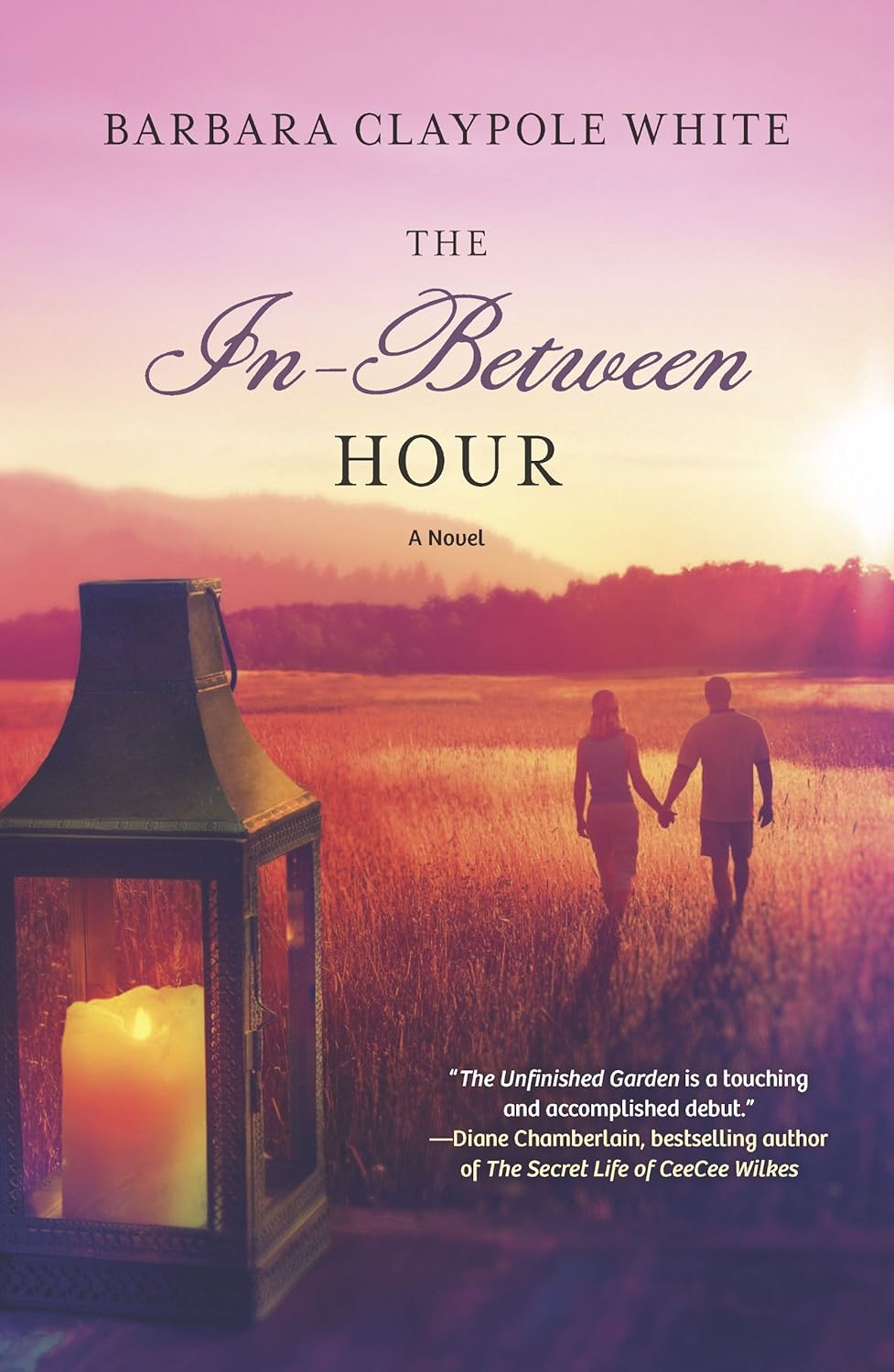
Review: The In-Between Hour


About the Book:
Bestselling author Will Shepard is caught in the twilight of grief, after his young son dies in a car accident. But when his father's aging mind erases the memory, Will rewrites the truth. The story he spins brings unexpected relief…until he's forced to return to rural North Carolina, trapping himself in a lie.

Holistic veterinarian Hannah Linden is a healer who opens her heart to strays but can only watch, powerless, as her grown son struggles with inner demons. When she rents her guest cottage to Will and his dad, she finds solace in trying to mend their broken world, even while her own shatters.

As their lives connect and collide, Will and Hannah become each other's only hope—if they can find their way into a new story, one that begins with love.

My Comments:
I downloaded this one to my Kindle quite some time ago, and never got around to reading it.  Judging by the description, it was just another romance, and somehow it never made its way to the top of the stack.  Then Kathleen Basi invited me to the Women's Fiction Cafe Week with Barbara Claypole White.  If figured it might be interesting and I started the book--and then life got in the way.  Still, I loved it.  I loved the story, I loved the characters and I loved the writing.  

A big issue in this book is mental illness.  Will's mother was mentally ill (my guess is bi-polar disorder or schizophrenia) and because of that, his childhood was anything but ideal.  Still, he knew his parents loved each other.  Hannah's son suffers from depression, and depression is the reason her father committed suicide. Will's father is losing his memory.  Barbara Claypole White manages to show the real effects mental illness has on other family members.

There are bedroom scenes in the book, though they aren't terribly graphic.  I don't generally recommend books with bedroom scenes to people who don't like them, but in this case, I will.  The bedroom scenes are easy enough to skim through and the rest of the book is good enough, different enough to make it worthwhile.  

Barbara Claypole White's descriptive writing was absolutely beautiful.  It slowed me down and made me savor the words and the pictures they painted.

I'd like to thank the publisher for making a review copy available via NetGalley and I'd like to thank Kathleen Basi for moving this book from the bottom of my stack to the top.  Grade:  A.  

Monday, March 16, 2015

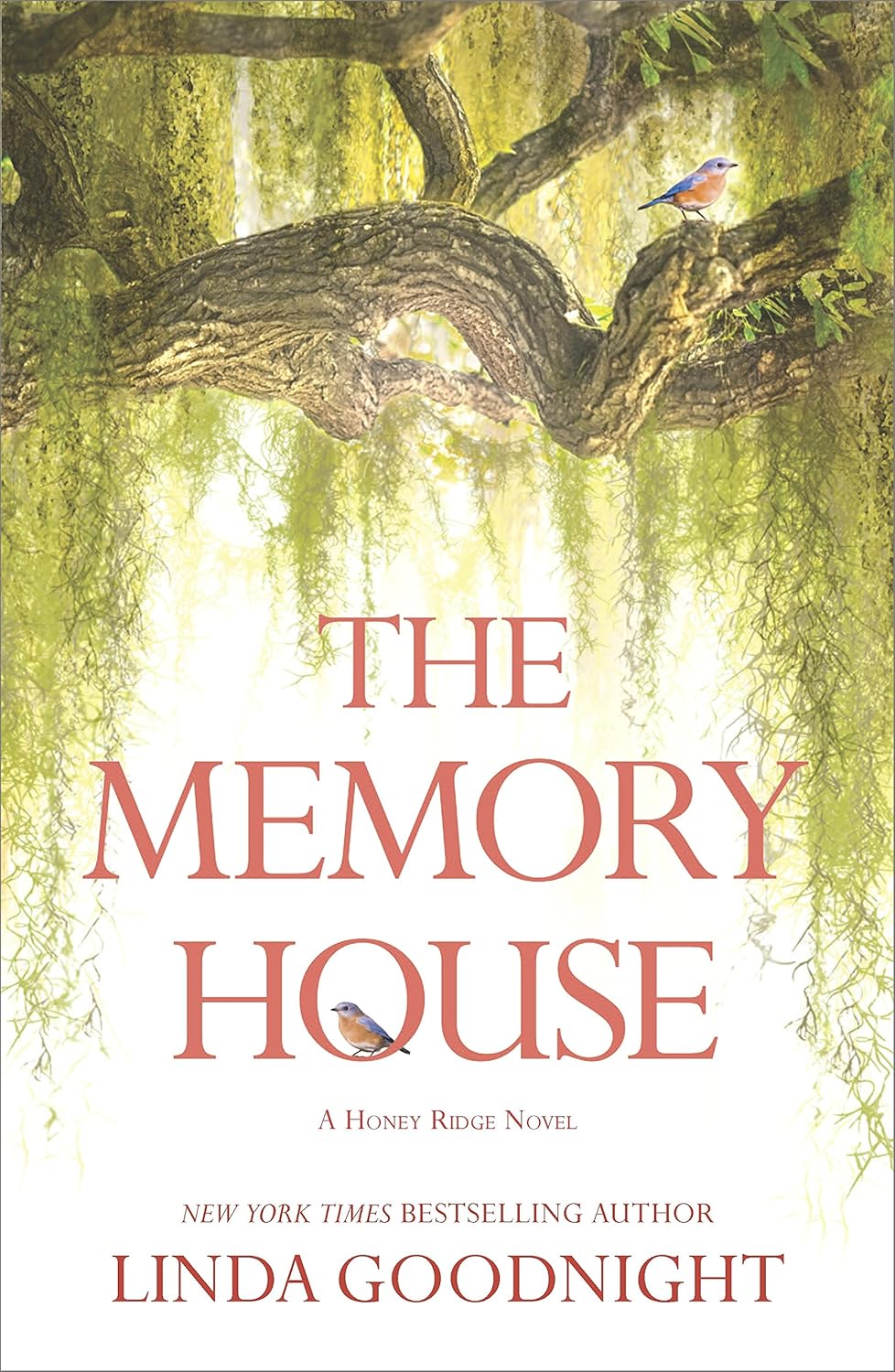
The Memory House: My Review


About the Book:
New York Times bestselling author Linda Goodnight welcomes you to Honey Ridge, Tennessee, and a house that's rich with secrets and brimming with sweet possibilities 

Memories of motherhood and marriage are fresh for Julia Presley—though tragedy took away both years ago. Finding comfort in the routine of running the Peach Orchard Inn, she lets the historic, mysterious place fill the voids of love and family. No more pleasure of a man's gentle kiss. No more joy in hearing a child call her Mommy. Life is calm, unchanging…until a stranger with a young boy and soul-deep secrets shows up in her Tennessee town and disrupts the loneliness of her world. 

Julia suspects there's more to Eli Donovan's past than his motherless son, Alex. There's a reason he's chasing redemption and bent on earning it with a new beginning in Honey Ridge. Offering the guarded man work renovating the inn, she glimpses someone who—like her—has a heart in need of restoration. But with the chance discovery of a dusty stack of love letters buried within the lining of an old trunk, the long-dead ghosts of a Civil War romance envelop Julia and Eli, connecting them to the inn's violent history and challenging them both to risk facing yesterday's darkness for a future bright with hope and healing.

My Comments:
On the one hand, this book has "series romance" written all over it, from the (Honey Ridge) after the title, to the setting in a bed and breakfast (what a stage for new characters to come and go) to the parts of the plot that did not wrap up neatly.  On the other hand, this story stands well by itself and frankly, the loose ends, the unanswered questions, make it much more realistic than those books where not only do he and she live happily ever after, all questions are also answered.

Julia's son disappeared one day, and as of the start of this book, there had been no trace of him found. Her marriage crumbled and she became depressed.  She and her sister purchased an old plantation home and have turned it into a bed and breakfast.  At this point it ranks higher on the charm scale than on the profitability scale.  Eli just got out of prison and has just been contacted by his son's great aunt.  It seems the mother of his son has died, and the aunt is too old to raise him.  She wants Eli to take on the job.  On the way there, Eli's car breaks down, he meets Julia, and things go from there.  Taken by itself, this part of the book would be a pretty standard good but not great romance full of hometown charm, an ex-husband who makes you roll your eyes and a bad guy boyfriend for the flakey younger sister.  However, this thread is not the whole story.  

The rest of the story is set during the Civil War, and it too is a romance.  By the end of the book there are several parallels between the two stories but they come together as the letters of the Civil War couple are found by the modern couple.  Sections are dated so it is easy to tell which story you are reading in each chapter.  

I looked up Linda Goodnight and found that she generally writes short inspirational romances.  While it is metioned that characters go to church and pray, we don't hear sermons and prayers are short.  It is a clean romance with no bedroom scenes or suggestions that they happened.  One of the heroines is married and though she has romantic feelings for her hero, her marriage is respected by both of them. 

I don't give many A's and I'd guess that most I give aren't to romance novels, despite the number of them that I read but this book is exceptionally good so I'll give it an exceptionally good grade, A.

Thanks to the publisher for making a review copy availble via NetGalley.

View My Stats