Showing posts with label Kathleen Basi. Show all posts

Saturday, May 01, 2021

Review of A Song for the Road by Kathleen Basi


About the Book:

It's one year after the death of her husband and twin teenagers, and Miriam Tedesco has lost faith in humanity and herself. When a bouquet of flowers that her husband always sends on their anniversary shows up at her workplace, she completely unravels. With the help of her best friend, she realizes that it's time to pick up the pieces and begin to move on. Step one is not even cleaning out her family's possessions, but just taking inventory starting with her daughter's room. But when she opens her daughter's computer, she stumbles across a program her daughter has created detailing an automated cross-country road trip, for her and her husband to take as soon-to-be empty nesters.

Seeing and hearing the video clips of her kids embedded in the program, Miriam is determined to take this trip for her children. Armed with her husband's guitar, her daughter's cello, and her son's unfinished piano sonata, she embarks on a musical pilgrimage to grieve the family she fears she never loved enough. Along the way she meets a young, pregnant hitchhiker named Dicey, whose boisterous and spunky attitude reminds Miriam of her own daughter.

Tornadoes, impromptu concerts, and an unlikely friendship...whether she's prepared for it or not, Miriam's world is coming back to life. But as she struggles to keep her focus on the reason she set out on this journey, she has to confront the possibility that the best way to honor her family may be to accept the truths she never wanted to face.

Hopeful, honest, and tender, A Song for the Road is about courage, vulnerability, and forgiveness, even of yourself, when it really matters.

My Comments:

I'm writing this post a week after a man who was very dear to my girls when they were babies was buried, a few days after the mom of a high school classmate--the mom who allowed homecoming floats to be built at her house for six years straight (which meant that she had 50+ teens there every night for a week)--was buried and the day after I heard that my pastor's mom died.  Despite the fact that we are in the holiday season, despite the fact that we are no longer close to that man, that the classmate was never a close friend of mine and that I'd best characterize my pastor as an acquaintance, having three deaths touch me during this supposedly joyful time of year has got me tearful.

How awful must it be to lose your whole family is one split second?  That's what happened to Miriam a year ago, and though she has buried much of her grief for the last year, something happens and now she knows she has to deal with it--and, as noted above, finds a program her daughter designed with the idea of sending her and her husband on a road trip.  

As Miriam travels across the country we learn about her family history and why things were not exactly how they appeared to outsiders.  We "see" some attractions that are not at the top of most people's "must see" list but which are interesting and charming in their own way (I've been to one of them several times, guess which one).  

The author, Kathleen Basi, is a composer and musician, along with being a writer, and she has made music a part of the story.  Miriam's son was a composer and left an unfinished piece, and she, who has spent her adult life as a church musician, is trying to finish it.  Basi uses terms known to musicians and which brought back memories of the piano class I took one semester in college, though I hadn't a clue what they meant--I just translated those passages as "she's writing fancy music now" and let it go at that.  Hopefully the words would mean more to a musician.  Her son's music wasn't the only unfinished business in the book, and Miriam's journey leads her to confront and deal with at least two big unfinished things.     I loved watching her journey not only through the country but through her grief and into the lives of others. 

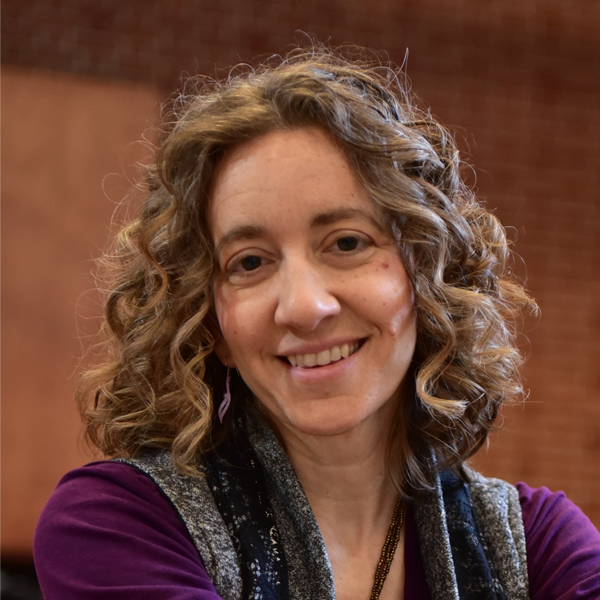
I'll be the first to admit that my opinion of the book may be affected by the fact that the author, Kathleen Basi, is someone I've gotten to know via the internet.  I've watched her kids grow up and discussed the challenges of parenting special needs kids.  I've followed the Facebook page on which she has shared her progress with this book and now I'm glad to give this book an A, because it was an engaging read that touched my heart.  

I'd like to thank her publisher for making a review copy available via NetGalley.       

If you click on the book title in the labels below, you can read other things I've written about the book.                                                      

Saturday, April 24, 2021

Martha and Mary

 Luke Chapter 10 includes the story of Martha and Mary.  I'll quote it below and being a good Catholic who respects copyright law and is too lazy to determine how many verses I can quote of a copyrighted version without running afoul of the law,  I'll use the public domain Catholic Bible, the Douay Rheims--this edition was published in 1890 and the general language is similar to the King James Version.

From Luke 10

 38 Now it came to pass as they went, that he entered into a certain town: and a certain woman named Martha, received him into her house.  39 And she had a sister called Mary, who sitting also at the Lord's feet, heard his word.40 But Martha was busy about much serving. Who stood and said: Lord, hast thou no care that my sister hath left me alone to serve? speak to her therefore, that she help me.41 And the Lord answering, said to her: Martha, Martha, thou art careful, and art troubled about many things:42 But one thing is necessary. Mary hath chosen the best part, which shall not be taken away from her. 

I just finished a NetGalley (advance publicity copy) of a book that brought this story to mind.  The book is A Song for the Road by Kathleen Basi.  


I loved this book and will be publishing a review of it when it gets closer to publication.  

Anyway, the story of Martha and Mary has always annoyed me just a little--yes, I'm a Martha, not a Mary.  I'm the volunteer, the one who leads Girl Scout troops, teaches religion classes, reads at Mass and is generally available if someone needs something done.  If service hours had been a thing when I was in high school, I'm sure I would have had plenty.  Give me something to do and I'm in my element.  Make me sit and socialize and I get uncomfortable fast.  

What is the story supposed to tell us?  Are we all supposed to spend our days sitting at His feet?  I'm sure to some extent the answer to that question is "yes".  We need to take time in prayer to listen to what He has to tell us, and for some of us, that can be hard.  Silence and contemplation is harder than a to-do list. 

However, I noticed in reading the story, it doesn't say "and Jesus said unto Martha 'put down your dishes, bank the fire and come listen to me. Don't worry about dinner ' " Perhaps he wasn't criticizing anything about Martha except her criticism of Mary. Both Martha and Mary loved Jesus, they just expressed that love differently.  

Martha and Mary appear in John's gospel as well, in Chapter 11:

20 Martha therefore, as soon as she heard that Jesus had come, went to meet him: but Mary sat at home.  21 Martha therefore said to Jesus: Lord, if thou hadst been here, my brother had not died. 22 But now also I know that whatsoever thou wilt ask of God, God will give it thee. 23 Jesus saith to her: Thy brother shall rise again. 24 Martha saith to him: I know that he shall rise again, in the resurrection at the last day. 25 Jesus said to her: I am the resurrection and the life: he that believeth in me, although he be dead, shall live:  26 And every one that liveth, and believeth in me, shall not die for ever. Believest thou this? 27 She saith to him: Yea, Lord, I have believed that thou art Christ the Son of the living God, who art come into this world. 28 And when she had said these things, she went, and called her sister Mary secretly, saying: The master is come, and calleth for thee. 29 She [Mary], as soon as she heard this, riseth quickly, and cometh to him. 30 For Jesus was not yet come into the town: but he was still in that place where Martha had met him. 31 The Jews therefore, who were with her in the house, and comforted her, when they saw Mary that she rose up speedily and went out, followed her, saying: She goeth to the grave to weep there. 32 When Mary therefore was come where Jesus was, seeing him, she fell down at his feet, and saith to him: Lord, if thou hadst been here, my brother had not died. 33 Jesus, therefore, when he saw her weeping, and the Jews that were come with her, weeping, groaned in the spirit, and troubled himself, 34 And said: Where have you laid him? They say to him: Lord, come and see. 35 And Jesus wept. 36 The Jews therefore said: Behold how he loved him. 37 But some of them said: Could not he that opened the eyes of the man born blind, have caused that this man should not die?  38 Jesus therefore again groaning in himself, cometh to the sepulchre. Now it was a cave; and a stone was laid over it. 39 Jesus saith: Take away the stone. Martha, the sister of him that was dead, saith to him: Lord, by this time he stinketh, for he is now of four days. 40 Jesus saith to her: Did not I say to thee, that if thou believe, thou shalt see the glory of God? (emphasis mine)

Again, Martha is portrayed as the doer, Mary as the receptive one--which doesn't mean that Martha was not receptive, it just means that she thought in practicalities---"he stinketh", and Mary had to leave the house and approach Jesus.  Both loved Him but they were different people and loved differently.  

In A Song for the Road, the main character, Miriam, starts off believing that she hasn't loved enough, and that she wasn't loved enough by some and through her journey she learns that the love of Martha (my words,  not Kathleen's) is no less (or greater) than the love of Mary.  

How do you love?  Are you a Martha or a Mary?  Are you being called to be more of the other?  


Monday, February 15, 2021

Religion and Fiction


When it comes to challenges for book bloggers, I'll admit, I don't usually play.  However, this year, one caught my eye:  The Book Blog Discussion Challenge.  Basically the idea is to commit to posting a certain number of discussion posts during the year, and then to link up and follow other bloggers discussions.  This is my first entry for that challenge.  I signed up at the Dabbler level, but I'm aiming for the high end of the scale. 

Religion in Fiction

What part should religion play in fiction, or any popular media?  Should it be limited to the "religion" or "religious fiction" section?  If it is a general market book, is it ok to mention that a character went to church?  That something they heard in church affected their life or related to the problem at hand?  Does any mention of faith make a book a "no go" for people who aren't religious? 

Books from certain publishers are marketed as Christian fiction and authors who seek to be published by these imprints know there are "dos" and "don'ts" and people who buy them know they are buying books that comport with and seek to spread certain beliefs.  

But what should be the role of religion in books that are not marketed as religious fiction? While the numbers aren't what they once were, Sunday morning church attendance, at least periodically, is a regular part of life for a large number of Americans. However, while a Christmas episode of many TV shows from years past would at least show characters going into a church, in much of today's media if religious people are portrayed at all they are shown as hopelessly naïve, as caricatures  or as bullies/abusers.  The idea that religion is a normal part of life, but not a part that you are trying to beat others over the head with, seems to be missing from popular culture, including books.  Can you have characters who are people of faith and whose faith is operative in their lives without making your book a call for others to adopt your beliefs? 

Kathleen Basi's Thoughts:


I recently had the opportunity to discuss books and writing with Kathleen Basi, whose book A Song for The Road will be published in May. 


The main character in A Song for the Road is a church musician but the book is not published by a religious publisher.  Since I knew she had been trying for some time to get this book published, I asked Kathleen if she had tried Christian publishers.  Her response (my transcription/paraphrase of a verbal interview):
I've had a lot of anxiety over the years about my fiction.  For example, there's a little bit of mild language in this book, and it's not really who I am--but I know that it's authentic.  There are things that are talked about in this book, things that Miriam witnesses and things that are addressed head on such as sex outside of marriage and related issues that made me nervous as very committed Catholic whose faith is very, very important to me.
However, I believe we don't do ourselves any good by pretending that the ugly things in the world don't exist. If we create this Pleasantville kind of world in which everything is black and white, and there's the good guys and the bad guys , we contribute to a binary view of the world that does not hold up to reality. And if we want our faith to be able to witness to the real world, we have to acknowledge what the real world is like.  

To circle back around, I have always existed in a real anxiety about how I'm on the crack between secular fiction and Christian fiction, because I'm really coming at it with a Christian worldview. And yet, at the same time, I'm departing from the some of the topics that would be in most Christian fiction.

One of my critique partners all the way through was saying, "Well, of course, she's [Miriam] having an existential crisis, any person of faith who goes through what she's going through-- she's grappling with the loss of her family-- it would be weird and inauthentic if she didn't have these questions."

 Kathleen and I talked for quite some time, but here is where we talked about faith in fiction


From Penelope Stokes:


Years ago I interviewed another author, Penelope Stokes.  Stokes got her start in the Christian fiction market and her first books were pretty typical of the genre at that time--romance novels where one of the characters making peace with God was part of the story.  Stokes' writing evolved over the years to being less explicitly religious even though it was still published by a Christian imprint.  Eventually she moved to a secular publisher.   I asked if that was her choice, or if Christian publishers would not accept her newer books: 

That shift was intentional.... I wanted to be able to address issues of diversity from a spiritual perspective, and as you observed, I wasn’t able to do that in a conventional Christian publishing setting. 

I originally published in the evangelical markets because...that’s where I started...and...because at the time the general market wasn’t doing much with spiritual fiction.... It’s true that my general market novels contain subject matter that would be unacceptable to an evangelical publisher, and some of my early readers have castigated me for abandoning my faith. Nothing could be further from the truth.... I really want readers to see that our preconceived notions of God are just that—our notions. 

Do you ever expect to write Christian fiction again?
In the sense of writing evangelical novels that offer answers instead of raising questions? Probably not. But then, even when I was writing for the Christian markets, my novels didn’t fit that mold. I was always pretty much a duck out of water.

My Comments:

I am a woman of faith and just as I like it when I find books about "more mature" women, like me, I like finding books about people for whom faith is  part of life.   However, the more your book explicitly pushes your faith on me, the more I'm likely to roll my eyes. 

I like to see religious activities, even if "activity" means the church picnic, portrayed as normal part of life.   I don't think books have to be ABOUT faith to acknowledge that faith exists and is important to at least some people. 
 
Perhaps it is because I am a person of faith but I like reading stories where characters struggle with matters of faith or how that faith should affect their lives.  I agree with Kathleen that Christians don't do themselves any favors when they paint the world as black and white and put themselves and those like them on the good side of the fence and those not like them on the bad side--at least until the heathens convert. 

Reality is that any of us with a belief system, whether religious or secular,  that promotes any values other than selfishness, are going to run into situations that challenge us because none of is perfect or selfless.  Whether our struggles are with basic belief, or with sexual morality, or with how much comfort we should give up to benefit others, the struggles are there, and a part of us.  

There is a screenwriter named Barbara Nicolosi who used to be a Catholic blogger.  Something she said hit me:  
Too many Christians think we are supposed to use the arts to give people the answers. We’re not. We’re supposed to use the arts to lead them into a question.
So, what do you think about religion in fiction, particularly in fiction that isn't marketed as religious fiction?  Is it an automatic turn-off?  Is it okay if the characters' beliefs mirror yours, but otherwise, no thanks?  How big a part can it play in a story before you start feeling preached to?  Do you like explicitly religious fiction? 


Saturday, February 06, 2021

How to Write a Novel

I wonder if the SEO gods will send all sorts of hits my way with a title like "How to Write a Novel"? Honestly, my answer would be to start with the first page and end with the last one, and then proofread and revise. However, I've come to realize it is much more complicated than that.  

Those who regularly read NetGalleys or other Advanced Reader Copies are familiar with the blurb that tells you not to quote anything without checking with the publisher, as the book is not in its final form.  Sometimes it is pretty obvious the book isn't finished--page numbers are missing from the table of contents and from other places in the book, or there are typos.  Other times the ARC really does seem "done". 

Years ago someone wrote a book about a client of ours and we were gearing up for damage control if necessary.  Then I found the book on NetGalley and my request for it was approved, as are most of my requests.  I spent the next few days at work carefully reading the book and sending my boss copious notes about it.  I had to explain what an ARC was, and how I scored this one, and the PR firm we hired was suitably impressed.  Once the book was published, I got the assignment of reading it, and comparing it to the ARC, and honestly I was surprised at how different it was.  The basic story was the same but one scene we found problematic was no longer there and another section had been moved. There were also changes to paragraphs here and there.  While I am sometimes and curious about how other books move through the revision process, I've never been interested enough to go through that exercise on my own time.  


Lately I've been following Kathleen Basi, whose novel A Song for the Road will be published in May, on Facebook and reading about how she sent in another round of revisions, got a publisher interested in the book and then revised it again.  I had the pleasure of chatting with Kathleen about her book and about writing in general, and I asked her about the writing process.

Here are some of the things she had to say:  (my transcription of a verbal interview)

The process of writing, revision and publication begins with a question--are you a plotter or a pantser? Some people write by the seat of their pants. I like to plot things out. I get completely paralyzed if I don't know where I'm going....I want to have a framework to start. 
I thought A Song for the Road would write itself because it was a road trip and had this built in structure.
The rough draft came out pretty quickly. But the revision process was long and painful on this book. Well, I shouldn't say painful. I actually enjoy revision. Drafting is difficult for me, but once the dough is mixed, and you get to get in there and knead and shape it—that's the part that I really enjoy. I think I spent six or seven months writing the draft of this book, and then another year and a half revising it.
When I started getting requests from agents, I did two more revisions for two agents who were interested in it, and ended up signing with one of them. And then did another revision after that before my agents felt like it was ready to go on submission. When it sold, then there was another major revision. It wasn't terrible, but it was it was big. I took out a major plotline that that had been sort of central at the beginning, but by that time, the book had matured into something else. We did another more minor round of revisions in the fall before I sent it in final manuscript.

Then I asked her:  "What was the difference? Without recounting the four different versions,  I mean, was Miriam always been the same person?"

Miriam has always been the same person. By the time A Song for the Road went out to agents and all of that, her character was pretty well set.

But in my initial concept for this book, this was a road trip that was structured around social media. She became an internet sensation. And while she was trying to have this private trip, she was also dealing with trolls, and people showing up wherever she was going to be.

I thought that gave her an extra layer of conflict: she was trying to do this intensely private this thing in public. But in the later stages of revision, editors and agents said this book doesn't need that. So most of it went away. In earlier versions of the book, at the end of every section, I had Facebook and Twitter interactions, stuff about her followers and how she was going viral. All of that went away in order to streamline and focus on what Miriam was going through.

Since Kathleen is also a composer and writes non-fiction, I asked her "So you're a composer, and you're a writer, and you write long fiction novels, you've also written a lot of magazine articles, you've written short books dealing with the liturgical seasons and so forth. How is writing a novel the same or different than writing music or writing shorter forms?

The challenge is different for each one. With nonfiction the structure sort of takes care of itself. You figure out, “Here’s the topic, and here's how I'm going to break it down.” You get to use headings and subheadings.  It's short pieces, and then you just have to tie them together. What's hard about writing nonfiction is making it so that somebody would actually want to read it.  It can't just be dry recitation of facts. So that's what's challenging.

In fiction, it's a lot harder to come up with the structure that propels it forward. You don't have those subheadings to guide you. Which was why the road trip was so nice, because it kind of gave me that structure. But with fiction, you have a lot more freedom to play with language, to pause and stop and really  dig into the moments and things that would just not be appropriate in nonfiction. 

With music, I'm writing texts for use in worship, and that I find much, much more difficult, actually. Because the syllables have to fall just right, and you have very few syllables to get a message across. It’s more accessible to congregational singing if it's consistent from one verse to the next, and that imposes a huge, huge amount of work on the composer to come up with texts that are that are appropriate theology, and which have the same number of syllables in the same stress pattern in every verse, and where accent syllables fall in the right place.  So yeah, that's hard, hard work.

Fiction is incredibly freeing compared to that. I'm not constrained in the same way. But I would imagine all of that text work means that I'm thinking about sentence cadence in a different way than I would if I just wrote fiction.


So, how do you write a novel? With lots of hard work, that's how. As a reader I'm glad there are people who are willing and able to write novels because I for one could never put that much work into one project.

I'd like to thank Kathleen for granting me an interview.  Stay tuned to this blog--we talked for almost an hour and I'm hoping to get a couple of other posts out of the interview.  You can learn more about Kathleen, her writing, her music and her beautiful family at her website. 
 

Wednesday, December 09, 2020

A Song for the Road


Its funny, I can't quite bring myself to abandon this blog, but I've clearly lost my enthusiasm for it.  I actually have a blog now that people read--about Girl Scouts.  

Still, this is where I got my start, and sometimes I like writing about non-Girl Scout things.  I can read old posts here and they are like looking at my past--those summer evenings at the pool reading while my baby (now a junior in high school) played with other kids, or those days when I ran a link up for Catholic bloggers, and of course those days when the mail brought package after package of review copies.  Now what review copies I get come via NetGalley and are read on my tablet.  

Back in the day, I "met" another Catholic blogger, Kathleen Basi, who is an author and a composer.  I reviewed several of her books, and you can read about them by clicking her name in the tags under this post.  I've been following her on Facebook and watching her beautiful children grow up.  I've read a bunch of Facebook posts about pouring herself into a novel she was writing, with no guarantee it would be published.  

I've always been a reader but one thing book blogging taught me (or shall we say started to teach me because there is still so much I don't know) is the process by which an author's ideas make it to my Fire tablet.  I had some vague idea of what happened up until the book was published, but no idea about what happened thereafter--how books ended up in my libarary or bookstore or what publicity was involved.  

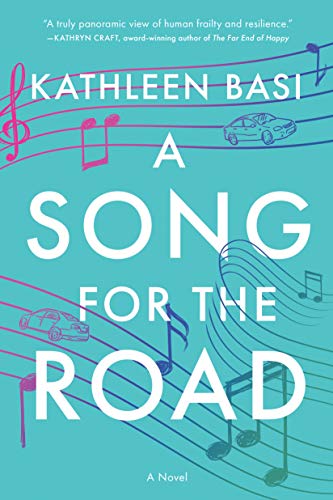
Well, Kathleen's book was accepted by a publisher and will be available for purchase in May.  I've been along for the ride (as in hanging on the back of the car, practically out of sight) since she announced she found a publisher, has been working on edits and is now working on publicity.  Her book was recently given a cover--isn't it pretty?  

The book is about a mother who loses her whole family in an instant, and then as part of the healing process goes on a cross-country road trip.  Kathleen is a musician so I guess we shouldn't be surprised that she works music into the plot.  A long road trip has always been one of those back of the mind goals for me.  When I was a kid we lived in Mississippi and every summer we'd pile into the station wagon and head to Wisconsin to visit Grandma and Grandpa and all the rest of my mom's family.  We'd spend two long hard days in the car going 55 mph through corn fields, corn fields and more corn fields, but several time a day we'd pass billboards advertising nearby attractions.  Of course we never stopped, and honestly I doubt most of these attractions were worth more than thirty minutes of time, but I've always wanted to get in the car and go where the road takes me, stopping to explore small town museums, old churches, and state parks.  

I've done a couple of short versions of that dream.  I  had a week off between jobs back in the late '80s and a reasonably new car, so I took off by myself toward Arkansas to see where the road took me--which ended up being Hot Springs, Mountain Home and a few other places.  I found that hitting the road alone (and for some reason my dreams of these road trips never involve other people) really wasn't as much fun as I dreamed it would be.  About ten years ago I flew to Minneapolis and rented a car to head to a family reunion in Wisconsin.  Instead of getting in the interstate and driving straight over, I got on an old state highway and meandered around, as I had a couple of hours to kill before my hosts would be home from work.  I purposefully scheduled my flight out for late afternoon to give me time to explore on Monday morning, when I drove out to the church where my grandparents were married, and then through Pepin where I saw the Laura Ingalls Wilder Museum as well as the headwaters of the Mississippi River.  

In a lot of ways, Kathleen is on a road trip now.  She is trying to virtually cross the country promoting her book, and so I'm giving her a shout-out here, for the dozen or so people who actually still read what I write here.  I keep telling myself I'm going to get "back into" book blogging, writing regularly, joining weekly link-ups and so on, but honestly, I'm probably not going to do so.  If you are one of those dozen or so folks, who still have me in your feeds or who check in regularly, thank you.  I guess in some ways life is like a road trip--there are so many places to go and you miss the fun of what's beyond the bend in the road if you are staying where you are--but on the other hand, its nice to come home to the familiar, so who knows, maybe you'll find your next favorite read here.  

Wednesday, February 22, 2012

Kathleen Basi: Author of Bring Lent to Life


Today, as we begin Lent, I'd like to welcome Kathleen Basi to This, That and the Other Thing. Kathleen is the author of Bring Lent to Life, a book of Lenten reflections and activities aimed primarily at families with young children. Kathleen is the mother of four beautiful children who range in age from newborn to almost seven. You can read about them, as well as Kathleen's thoughts about motherhood and faith at her blog, So Much to Say, So Little Time.

 Kathleen's latest book is Bring Lent to Life: Activities and Reflections for Your Family  (my review). In it she gives a plethora of ideas for celebrating Lent in your home and making more than just a time to lose a few pounds. She graciously agreed to answer a few questions for me, so, to paraphrase someone famous "here's Kathleen"! 
 
One thing you mention in your book is that no one should use all your ideas in a year. What is your family doing this year?


Honestly, we are in New Baby Mode, so I haven't thought about it yet. I can tell you this much: I planned Advent to the nanosecond, and Baby Michael put two little hands on the plan and tossed it out the window. I've learned my lesson! I imagine we'll probably decide week by week, like everyone else. The Easter Tree activities, in which we write or draw on leaves and flowers in response to reflections and other activities (they do a good job illustrating it in this video), are important because they give the kids the tactile sense of time passing--watching the bare tree fill up with leaves and flowers as we approach Easter. So I'm sure we'll do those.


What's your favorite activity in the book?


Week four is about renewal (spiritual and physical, i.e. spring), and the way that they enrich each other. Anyone who knows me at all knows that I find God most clearly in creation. In week four, I suggest doing a picnic and nature walk as a way to reflect on the visible journey from desert (winter) to life (spring).  And I love to cook, so the family recipes (my husband is Italian) are high on the list, too.


The thought struck me when reading the book that it would be a great resource for Catholic schools or parishes to distribute. Do you have bulk rates available? If so, how would someone arrange it?


Liguori Publications definitely offers bulk rates. The best way to arrange it is to call the company directly at 800-325-9521. The sales reps are super nice; I've dealt with them recently myself.


I notice the book is not available for the Kindle or Nook. Was this a decision in which you participated? If so, (or if you know why that decision was made) why is it not digitally available?


Had to call in backup on this question! The e-reader format is a separate production process, which they didn't have enough time to finish before Lent this year. However, Bring Lent to Life is on the list to be developed in e-format in the near future. It may not be ready for this Lent, but will definitely be ready next year, and possibly sooner.

I know you live in the general area of St. Louis MO. If a parish in that area is looking for a Lenten speaker, are you available? Is the speaker circuit something in which you have any interest?


I'm definitely interested in the opportunity, but of course, I have a young family, so we would have to work around those obligations to make it possible.


You've mentioned on your blog that you are much more fond of Advent than of Santa; how do you like the Easter Bunny? What does he bring at your house? 

The Easter Bunny does come to the house, but he just brings candy--no presents--and not in large quantities. We've spent a couple of years trying to achieve the right balance there. My husband's family gives up sweets for Lent every year, and has done so for decades. We follow that tradition (although we do individual practices as well), so all of us are ready for some sugar come Easter. But we try to keep it under control, because candy gets tiresome pretty quickly.


You've done Advent and Lent; what's next?


Next up is a project for "the rest of the year", i.e. Ordinary Time, which I believe is make-or-break time for passing on a vibrant faith to our children. I'll be exploring the Beatitudes not as a set of pithy sayings we memorize, but in terms of how to live them out, in very practical terms. How exactly do we become "poor in spirit?" Are we doing anything that we're likely to be persecuted for?

The more time goes by, the more convinced I am that faith falters when we try to compartmentalize it. We serve God (or not) by what we do every day, not just during the high or penitential seasons. I'm really excited about this book.

Sunday, February 12, 2012

Review: Bring Lent to Life


About the Book:
All too often the liturgical season that carries the Church from the dark days of winter to the new life of spring can be heavy and hard to share with your family. But in Bring Lent to Life, Kate Basi provides fresh ideas for growing your family's faith throughout Lent and into Easter. Each week, journey with your family through reflection-based activities that center on a Lenten theme. Then, bring these central aspects of our faith to life with creative activities that engage young and old: The Easter Tree craft activity grows and blooms as Easter approaches, filled with flowers and leaves created as part of your Lenten observance. 
Sunday Love Letters share the love of Christ with family members. Crafts, family outings, recipes, and other activities help reveal the meaning of Lent. Don't fall into a rut with your family's Lenten observance this year. Instead, Bring Lent to Life!

My Comments:
The most popular post I've ever written, one that gets hits year after year, one that makes my ratings spike every spring, is my post on Lenten Activities for Kids.  Obviously there are a lot of people trying to make Lent meaningful to their children.  Kathleen Basi's book gives a good framework for parents of young children.  

The book is divided into sections for each week and it includes reflections for both adults and kids.  It includes crafts, recipes and prayer activities.  For example, a family trip to the sacrament of reconciliation is recommended.  The Easter Tree activity gives a visual way of tracking progress.  Basi is smart enough to warn folks not to try to do everything in the book, that Lent lasts a long time and you don't want to burn out before it is over. I'll definitely add a few of her activities to those our family does.  

I'd like to thank Kathleen Basi for sending me a review copy of the book.  She is well aware that not all my reviews are positive, but I'll give this book a B+.  

View My Stats